By Kevin Brianton, Adjunct Senior Research Fellow, La Trobe University, Melbourne, Australia
When actress Kim Novak arrived in Hollywood in the 1950s, she couldn’t believe how much makeup they applied to her face before filming. She felt a new face was being painted on her every morning. She often hid in a room to remove a few layers before filming, so some of her face might appear on screen. While Hollywood manufactured polished illusions, the Italian actress Anna Magnani offered a new approach. “Leave me my wrinkles,” she famously told her makeup artist, “it took me a lifetime to get them.” The comment was made during the filming of The Rose Tattoo in 1955. She refused to hide her age on screen and won an Oscar for the film.
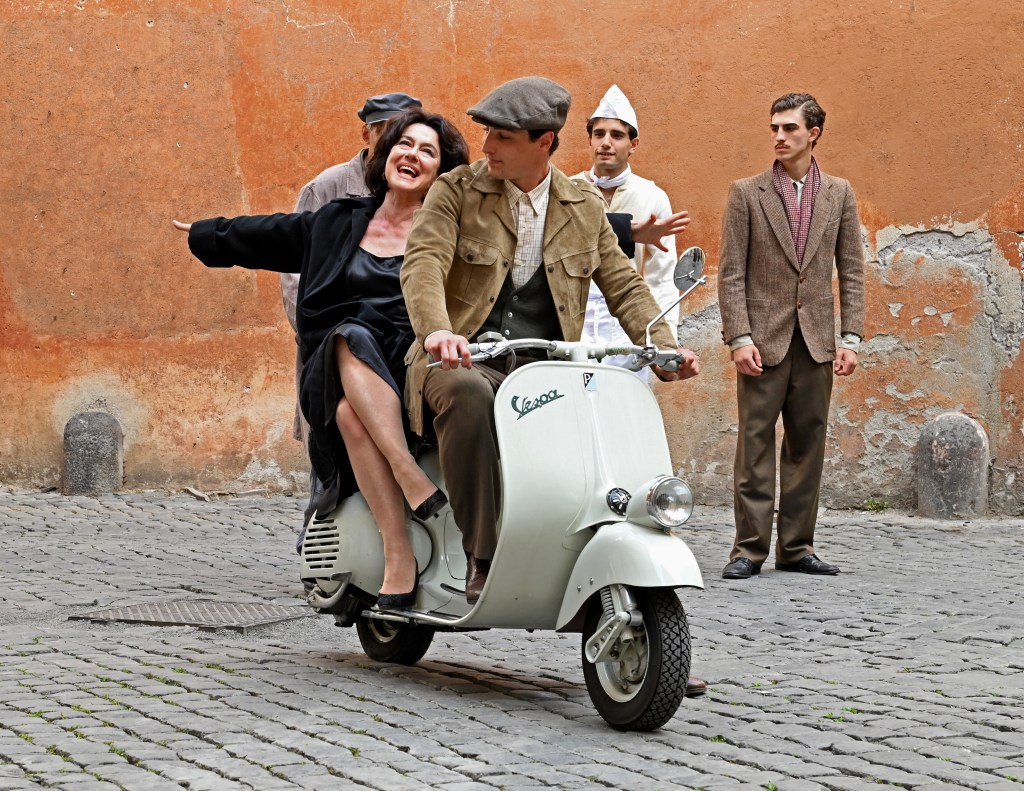
As the 2026 Italian Film Festival is staging a retrospective of her films across Australia, it is a perfect time to look at Magnani’s legacy, particularly how she worked against the rigid strictures of Hollywood glamour. The retrospective is headed by Anna Magnani – The Untold Story, originally titled Anna, a biopic feature film that tracks the private vulnerabilities, resilience, and complex love life of the iconic Italian cinema legend. Monica Guerritore, an Italian film, theatre, and television actress, co-wrote and directed the biopic. She worked on the film’s script with the late, celebrated journalist and screenwriter Andrea Purgatori – the film is dedicated to his memory. The film marks her directorial debut, and it is the first major feature-length production dedicated to chronicling Magnani’s off-screen battles. She also plays Magnani with a strong emotional intensity and has clearly spent many hours copying the famous actress’s dramatic gestures.
The film opens on 21 March 1956, when Magnani is nominated for the Academy Award for Best Actress for her role in The Rose Tattoo (1955). Instead of attending a glitzy Hollywood ceremony, Magnani wanders through the dark, atmospheric alleys and public squares of Rome, waiting anxiously for transatlantic news of the Oscar results. In a Felliniesque sequence, she moves through the city alongside a young woman who will later become her influential agent, Carol Levi, played by Beatrice Grannò; she encounters everyday Romans and reflects deeply on her past. Central to her memories is her turbulent, career-defining relationship with legendary director Roberto Rossellini, played by Tommaso Ragno, whom she views as a permanent mark on her heart.
Legendary playwright Tennessee Williams, briefly represented in the film, was so captivated by Magnani that he wrote the original Broadway play with her in mind. She initially turned it down because she feared her English wasn’t strong enough, but she finally agreed to do the 1955 cinematic adaptation. At the ceremony at the RKO Pantages Theatre in Hollywood, Marlon Brando presented the award. When he read Magnani’s name, her young Italian co-star, Marisa Pavan, who was also nominated that night for Best Supporting Actress, walked up to accept the statuette on her behalf. At 5:30 am in Rome, an American journalist frantically called Magnani’s home to tell her she had won. Still half-asleep, Magnani was convinced it was a cruel prank. She reportedly shouted back: “You’re lying! If this is a joke, I’ll kill you!” before hanging up and demanding to be left alone to sleep. It took multiple calls and radio broadcasts before she finally accepted the award was hers.
Magnani won the award for her fierce, uncompromising performance as Serafina Delle Rose, starring opposite Burt Lancaster. She became the first Italian actor – and the first non-English-speaking native – to win a competitive Academy Award. It was no mean feat. She competed against established Hollywood icons such as Susan Hayward and Katharine Hepburn, yet Magnani won without hiding her wrinkles or wearing heavy makeup, embodying a raw reality that fascinated American audiences.
Magnani’s Best Actress win at the in 1956 shattered traditional Hollywood conventions. When news of the historic Oscar hit Italy, the entire country erupted into a massive national celebration. Italian newspapers completely cleared their front pages, treating the Oscar win as a monumental victory of national pride and cultural validation after the dark years of World War II. The film only gives a partial glimpse of the mayhem that ensued.
Thousands of ordinary Romans, paparazzi, and filmmakers instantly swarmed Magnani’s apartment building. They filled the streets, cheered her name, and threw flowers at her windows until she finally came outside to greet the crowd. The public celebration was deeply personal. To Italians, Magnani was not a distant, plastic Hollywood star; she was “Nannarella” or “Mamma Roma”- an earthy, working-class woman who had taken Italian grit and authenticity to the absolute peak of the international stage.
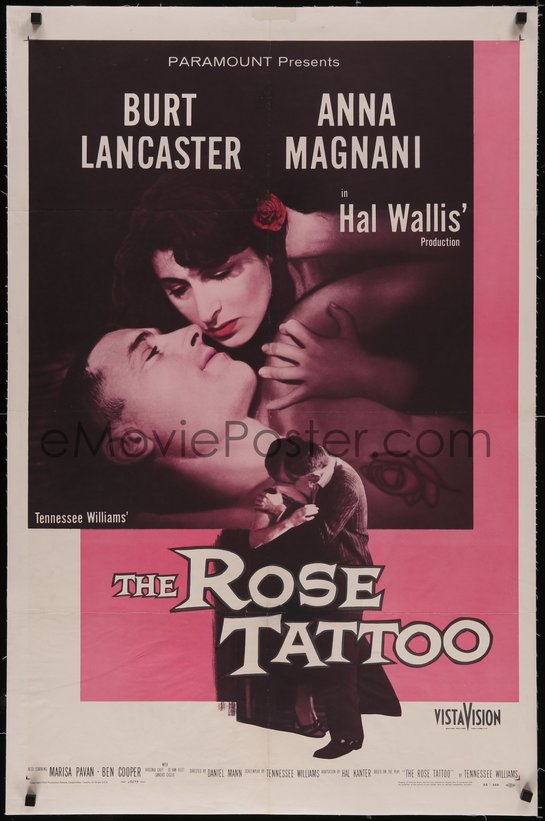
In The Rose Tattoo, Burt Lancaster played Alvaro Mangiacavallo, a well-meaning, buffoonish truck driver who attempts to woo Magnani’s grief-stricken character, Serafina. At the time, Lancaster was Hollywood’s ultimate athletic tough-guy and swashbuckler. Playing Alvaro required a massive artistic risk, forcing him to embrace a highly expressive, comedic, and vulnerable Italian American character. Lancaster later admitted that acting alongside Magnani was thrilling but exhausting. He described her as a force of nature on set, noting that her raw, unpredictable emotional energy forced him to drop his rehearsed cues and react in the moment.
The biopic focuses more on her personal life and the decline of her later career. It does not examine films like Rome, Open City (1945) or Mamma Roma (1962) in much detail. It explores her fierce fights to protect her authenticity and her fiery clashes with old-school movie executives.
The real-life partnership between Anna Magnani and Roberto Rossellini, who directed Rome: Open City, was one of the most passionate, artistically revolutionary, and ultimately explosive pairings in cinema history. Magnani and Rossellini began their affair in 1944 amidst the ruins of World War II, while Rossellini was still married to the costume designer Marcella De Marchis. On and off the screen, Magnani and Rossellini were a powerful couple. Together, they helped create the Italian Neorealism movement. Rossellini cast Magnani as Pina, and the movie became a global sensation. In her role in Rome, Open City (1945), she became the figurhead of Italian neorealism, proving that ordinary lives held profound cinematic value. The scene of Pina’s iconic, desperate sprint down a Roman street as she chased Francesco, who was being taken away by the Nazis, before being gunned down, became the universal symbol of Italian wartime resilience and launched both of their international careers. Their off-screen relationship was notoriously tempestuous. Professionally, they continued to break ground with Paisan (1946) and L’Amore (1948).
Their relationship’s end became Hollywood lore. The great Swedish-born actress Ingrid Bergman, captivated by Rossellini’s films, sent him a famous fan letter saying that if he needed a Swedish actress who spoke English, she was ready to make a movie with him. Rossellini secretly met Bergman in Paris, fell in love, and chose to cast her in his upcoming project, Stromboli, a role originally intended for Magnani. Reportedly, when rumours of an affair reached Magnani, Rossellini denied them repeatedly until she broke and emptied a plate of spaghetti directly over his head. Then, in a spectacular act of revenge, she used Rossellini’s discarded ideas to shoot her own film, Volcano (1950), on an island right next to where Rossellini and Bergman were shooting Stromboli (1950). Despite the bitter public fallout, the Italian public fiercely sided with Magnani, heavily criticizing Rossellini and Bergman, who also faced a massive moral scandal in the United States.
Following her historic 1956 win, Hollywood was desperate to replicate the magic of The Rose Tattoo. Magnani stayed in America to make two more high-profile features, both of which repeated her explosive, passionate archetype. George Cukor directed Wild Is the Wind (1957), in which Magnani starred as an Italian woman brought to Nevada to marry her late sister’s husband, played by Anthony Quinn. Her performance was so powerful that it earned her a second consecutive Academy Award nomination for Best Actress, though she lost to Joanne Woodward.
The Fugitive Kind (1960) marked a highly anticipated reunion with the playwright Tennessee Williams, who adapted his play Orpheus Descending specifically for her. Magnani starred opposite Marlon Brando. While the pairing of two of cinema’s most notoriously intense method actors sounded perfect on paper, their off-screen chemistry was famously icy and competitive, resulting in a dark, volatile film that became a cult classic. Despite their clashes, Brando deeply respected her electric presence. Both shared an allegiance to fierce emotional honesty over polished line-delivery. Much later, Meryl Streep frequently cited the emotional transparency of Italian neorealism—spearheaded by Magnani—as a template for letting an audience see a character’s internal suffering.
When Magnani fell terminally ill with pancreatic cancer in 1973, it was Rossellini who returned to her side, keeping watch at her deathbed for 45 days until she passed away. He ultimately arranged for her to be buried in his own family’s private mausoleum. The biopic covers these years well.
Writer and director Guerritore directed the biopic following the success of the TV miniseries Inganno or Deceitful Love. The movie premiered at the Rome Film Festival in 2025 and is now being shown at the Italian Film Festival in Australia in September and October 2026.
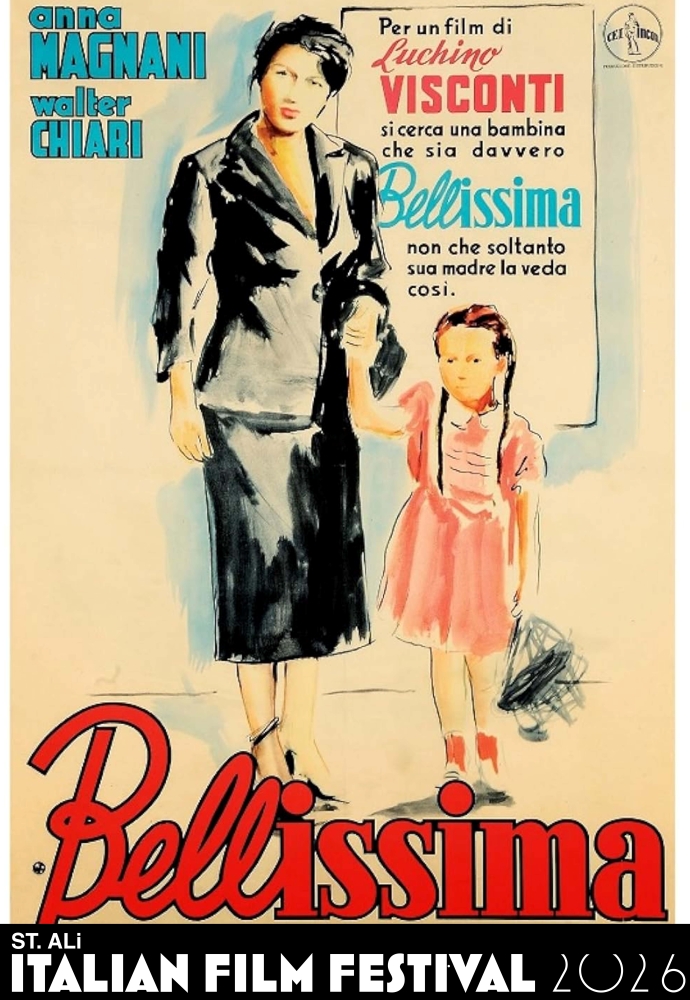
Other films in the retrospective include Bellissima (1951) and Mamma Roma (1962). Bellissima, directed by Luchino Visconti, follows Maddalena Cecconi, played by Magnani, a fiercely determined working-class nurse who becomes utterly obsessed with turning her plain young daughter, Maria, into a movie star. When legendary director Alessandro Blasetti announces a talent search for a ‘most beautiful” little girl for his next feature film, Maddalena risks everything to secure Maria a spot. Maddalena spends every cent her husband earns on acting coaches, high-end dressmakers, hairdressers, and dance lessons for Maria, draining the family’s modest life savings and sparking explosive fights at home. Desperate for an edge, Maddalena falls prey to Alberto Annovazzi, played by Walter Chiari, a cynical studio insider who promises to use his connections to help Maria in exchange for bribes, exploiting Maddalena’s fierce maternal ambition.
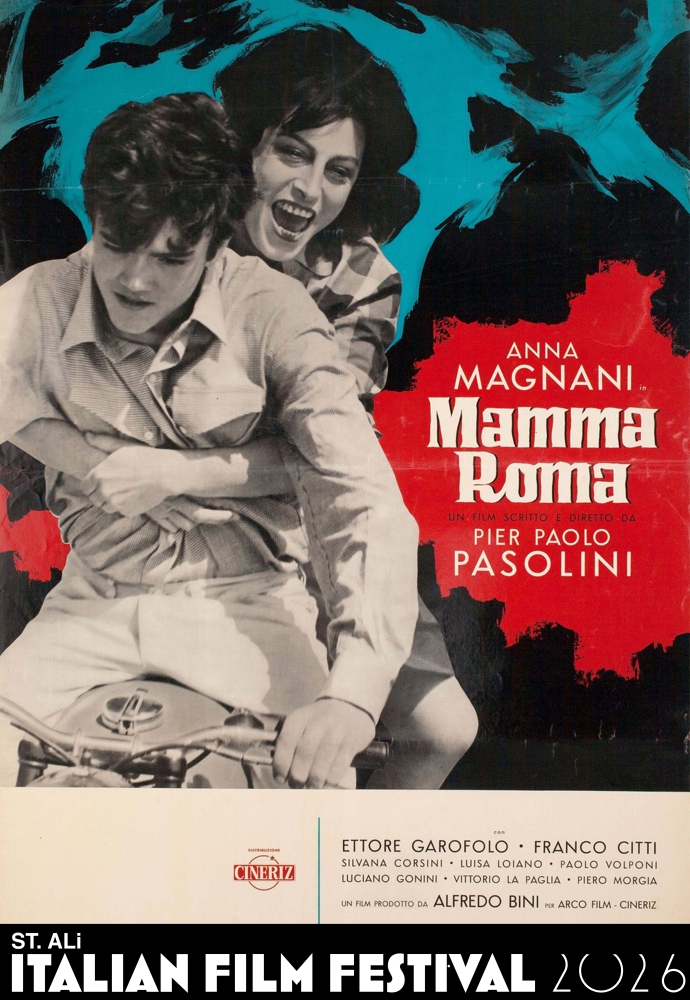
Along with The Rose Tattoo and Bellissima, Mamma Roma formed the trilogy of Anna Magnani’s legendary “motherhood” roles. Each film uses her explosive, raw energy to look at postwar Italian survival through a different lens. It is commendable that the Italian Film Festival has chosen to highlight Magnani’s career, but two films and a biopic are only a minor tribute to the actress. Access to films for festival organisers is often problematic, and it is a shame the program doesn’t include the third film in the Maternal Sacrifice trilogy, The Rose Tattoo, particularly since the biopic references it so often. Rome: Open City (1945) was another obvious choice for inclusion. Fortunately, modern audiences have plenty of options if they want to see films like these, but a film festival is a great way to see them on the big screen.
When American method actors travelled to Rome in the 1950s and 60s, many sought out Magnani. Her influence continued well after her death. Meryl Streep frequently cited the emotional transparency of Italian neorealism – spearheaded by Magnani – as a template for letting an audience see a character’s internal suffering. When Kate Winslet showed her natural middle aged working mother body in the TV series Mare of Easttown (2021), she famously refused to let the director airbrush her stomach out of a sex scene. Anna Magnani would have been proud.

