Anna Magnani retrospective

By Kevin Brianton, Adjunct Senior Research Fellow, La Trobe University, Melbourne, Australia
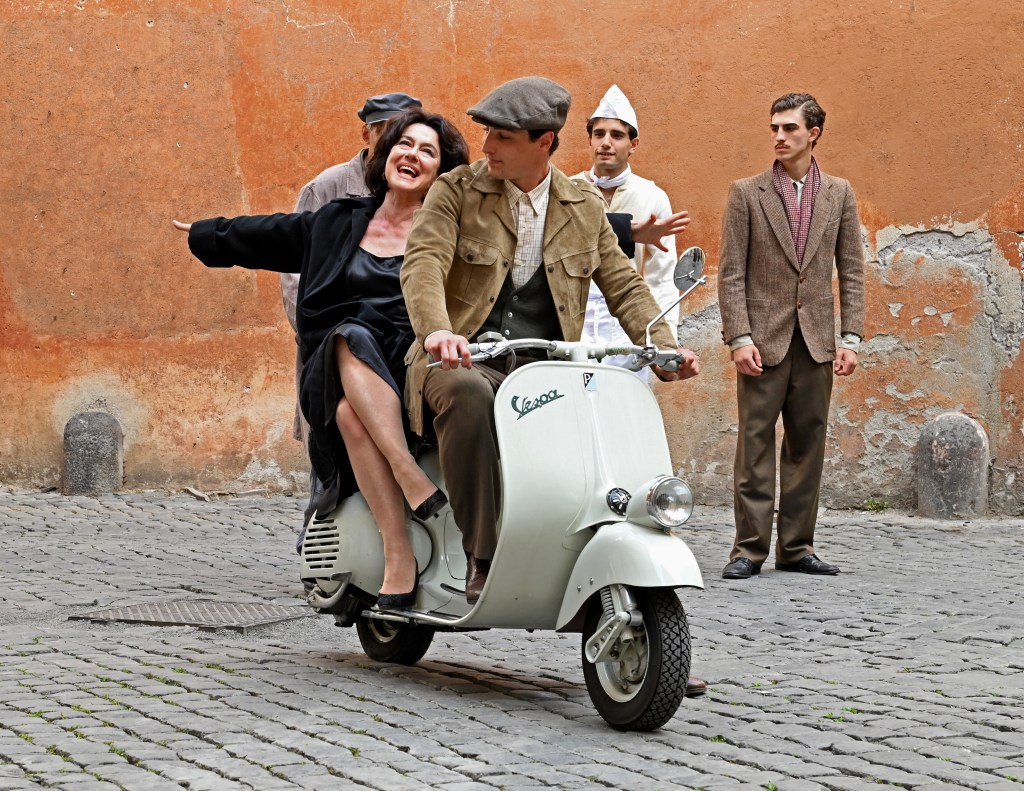
The retrospective is headed by Anna Magnani – The Untold Story, originally titled Anna, a biopic feature film that tracks the private vulnerabilities, resilience, and complex love life of the iconic Italian cinema legend. Photos courtesy of the Italian Film Festival.

When actress Kim Novak arrived in Hollywood in the 1950s, she couldn’t believe how much makeup they applied to her face before filming. She felt a new face was being painted on her every morning. She often hid in a room to remove a few layers before filming, so some of her face might appear on screen. While Hollywood manufactured polished illusions, the Italian actress Magnani offered a new approach. “Leave me my wrinkles,” she famously told her makeup artist, “it took me a lifetime to get them.” The comment was made during the filming of The Rose Tattoo in 1955. She refused to hide her age on screen and won an Oscar for the film.

As the upcoming Italian Film Festival is staging a retrospective of her films across Australia, it is a perfect time to look at Magnani’s legacy, particularly how she worked against the rigid strictures of Hollywood glamour. The retrospective is headed by Anna Magnani – The Untold Story, originally titled Anna, a biopic feature film that tracks the private vulnerabilities, resilience, and complex love life of the iconic Italian cinema legend.  Monica Guerritore, an Italian film, theatre, and television actress, co-wrote and directed the biopic. She worked on the film’s script with the late, celebrated journalist and screenwriter Andrea Purgatori – the film is dedicated to his memory. The film marks her directorial debut, and it is the first major feature-length production dedicated to chronicling Magnani’s off-screen battles. She also plays Magnani with a strong emotional intensity and has clearly spent many hours copying the famous actress’s dramatic gestures.

The film opens on 21 March 1956, when Magnani is nominated for the Academy Award for Best Actress for her role in The Rose Tattoo (1955). Instead of attending a glitzy Hollywood ceremony, Magnani wanders through the dark, atmospheric alleys and public squares of Rome, waiting anxiously for transatlantic news of the Oscar results. In a Felliniesque sequence, she moves through the city alongside a young woman who will later become her influential agent, Carol Levi, played by Beatrice Grannò; she encounters everyday Romans and reflects deeply on her past. Central to her memories is her turbulent, career-defining relationship with legendary director Roberto Rossellini, played by Tommaso Ragno, whom she views as a permanent mark on her heart.

Legendary playwright Tennessee Williams, briefly represented in the film, was so captivated by Magnani that he wrote the original Broadway play with her in mind. She initially turned it down because she feared her English wasn’t strong enough, but she finally agreed to do the 1955 cinematic adaptation. At the ceremony at the RKO Pantages Theatre in Hollywood, Marlon Brando presented the award. When he read Magnani’s name, her young Italian co-star, Marisa Pavan, who was also nominated that night for Best Supporting Actress, walked up to accept the statuette on her behalf. At 5:30 am in Rome, an American journalist frantically called Magnani’s home to tell her she had won. Still half-asleep, Magnani was convinced it was a cruel prank. She reportedly shouted back: “You’re lying! If this is a joke, I’ll kill you!” before hanging up and demanding to be left alone to sleep. It took multiple calls and radio broadcasts before she finally accepted the award was hers.

Magnani won the award for her fierce, uncompromising performance as Serafina Delle Rose, starring opposite Burt Lancaster. She became the first Italian actor – and the first non-English-speaking native – to win a competitive Academy Award. It was no mean feat. She competed against established Hollywood icons such as Susan Hayward and Katharine Hepburn, yet Magnani won without hiding her wrinkles or wearing heavy makeup, embodying a raw reality that fascinated American audiences.

Magnani’s Best Actress win at the in 1956 shattered traditional Hollywood conventions. When news of the historic Oscar hit Italy, the entire country erupted into a massive national celebration. Italian newspapers completely cleared their front pages, treating the Oscar win as a monumental victory of national pride and cultural validation after the dark years of World War II. The film only gives a partial glimpse of the mayhem that ensued.

Thousands of ordinary Romans, paparazzi, and filmmakers instantly swarmed Magnani’s apartment building. They filled the streets, cheered her name, and threw flowers at her windows until she finally came outside to greet the crowd. The public celebration was deeply personal. To Italians, Magnani was not a distant, plastic Hollywood star; she was “Nannarella” or “Mamma Roma”- an earthy, working-class woman who had taken Italian grit and authenticity to the absolute peak of the international stage.
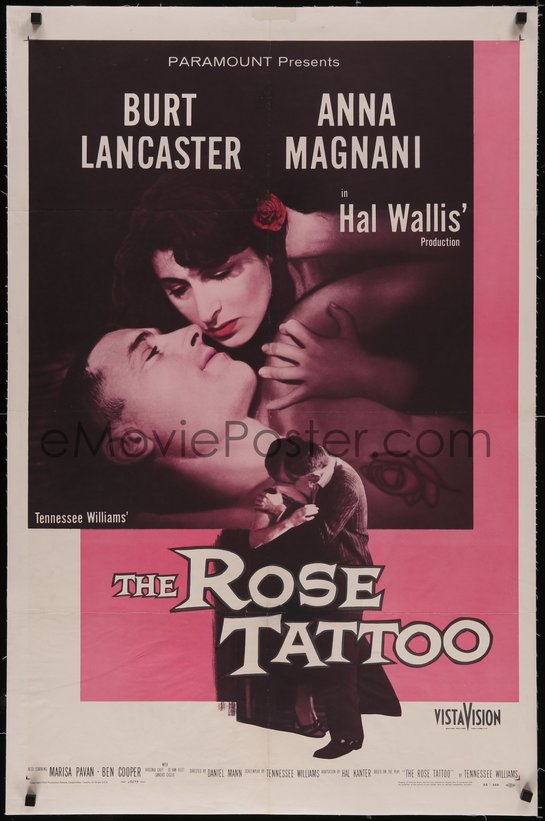
The film opens on 21 March 1956, when Magnani is nominated for the Academy Award for Best Actress for her role in The Rose Tattoo (1955). Image courtesy of emovieposter.com.

In The Rose Tattoo, Burt Lancaster played Alvaro Mangiacavallo, a well-meaning, buffoonish truck driver who attempts to woo Magnani’s grief-stricken character, Serafina. At the time, Lancaster was Hollywood’s ultimate athletic tough-guy and swashbuckler. Playing Alvaro required a massive artistic risk, forcing him to embrace a highly expressive, comedic, and vulnerable Italian American character. Lancaster later admitted that acting alongside Magnani was thrilling but exhausting. He described her as a force of nature on set, noting that her raw, unpredictable emotional energy forced him to drop his rehearsed cues and react in the moment.

The biopic focuses more on her personal life and the decline of her later career. It does not examine films like Rome, Open City (1945) or Mamma Roma (1962) in much detail. It explores her fierce fights to protect her authenticity and her fiery clashes with old-school movie executives.

The real-life partnership between Anna Magnani and Roberto Rossellini, who directed Rome: Open City, was one of the most passionate, artistically revolutionary, and ultimately explosive pairings in cinema history. Magnani and Rossellini began their affair in 1944 amidst the ruins of World War II, while Rossellini was still married to the costume designer Marcella De Marchis. On and off the screen, Magnani and Rossellini were a powerful couple. Together, they helped create the Italian Neorealism movement. Rossellini cast Magnani as Pina, and the movie became a global sensation. In her role in Rome, Open City (1945), she became the figurhead of Italian neorealism, proving that ordinary lives held profound cinematic value. The scene of Pina’s iconic, desperate sprint down a Roman street as she chased Francesco, who was being taken away by the Nazis, before being gunned down, became the universal symbol of Italian wartime resilience and launched both of their international careers. Their off-screen relationship was notoriously tempestuous. Professionally, they continued to break ground with Paisan (1946) and L’Amore (1948).

Their relationship’s end became Hollywood lore. The great Swedish-born actress Ingrid Bergman, captivated by Rossellini’s films, sent him a famous fan letter saying that if he needed a Swedish actress who spoke English, she was ready to make a movie with him. Rossellini secretly met Bergman in Paris, fell in love, and chose to cast her in his upcoming project, Stromboli, a role originally intended for Magnani. Reportedly, when rumours of an affair reached Magnani, Rossellini denied them repeatedly until she broke and emptied a plate of spaghetti directly over his head. Then, in a spectacular act of revenge, she used Rossellini’s discarded ideas to shoot her own film, Volcano (1950), on an island right next to where Rossellini and Bergman were shooting Stromboli (1950). Despite the bitter public fallout, the Italian public fiercely sided with Magnani, heavily criticizing Rossellini and Bergman, who also faced a massive moral scandal in the United States.

Following her historic 1956 win, Hollywood was desperate to replicate the magic of The Rose Tattoo. Magnani stayed in America to make two more high-profile features, both of which repeated her explosive, passionate archetype. George Cukor directed Wild Is the Wind (1957), in which Magnani starred as an Italian woman brought to Nevada to marry her late sister’s husband, played by Anthony Quinn. Her performance was so powerful that it earned her a second consecutive Academy Award nomination for Best Actress, though she lost to Joanne Woodward.

The Fugitive Kind (1960) marked a highly anticipated reunion with the playwright Tennessee Williams, who adapted his play Orpheus Descending specifically for her. Magnani starred opposite Marlon Brando. While the pairing of two of cinema’s most notoriously intense method actors sounded perfect on paper, their off-screen chemistry was famously icy and competitive, resulting in a dark, volatile film that became a cult classic. Despite their clashes, Brando deeply respected her electric presence. Both shared an allegiance to fierce emotional honesty over polished line-delivery. Much later, Meryl Streep frequently cited the emotional transparency of Italian neorealism—spearheaded by Magnani—as a template for letting an audience see a character’s internal suffering.

When Magnani fell terminally ill with pancreatic cancer in 1973, it was Rossellini who returned to her side, keeping watch at her deathbed for 45 days until she passed away. He ultimately arranged for her to be buried in his own family’s private mausoleum. The biopic covers these years well.

Writer and director Guerritore directed the biopic following the success of the TV miniseries Inganno or Deceitful Love. The movie premiered at the Rome Film Festival in 2025 and is now being shown at the Italian Film Festival in Australia in September and October 2026.
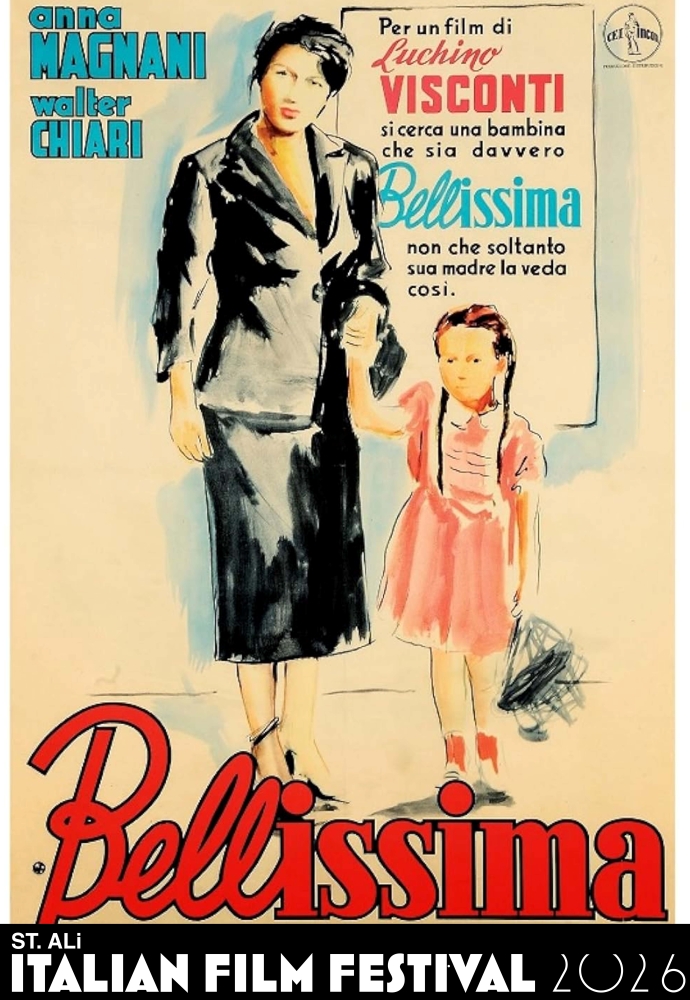
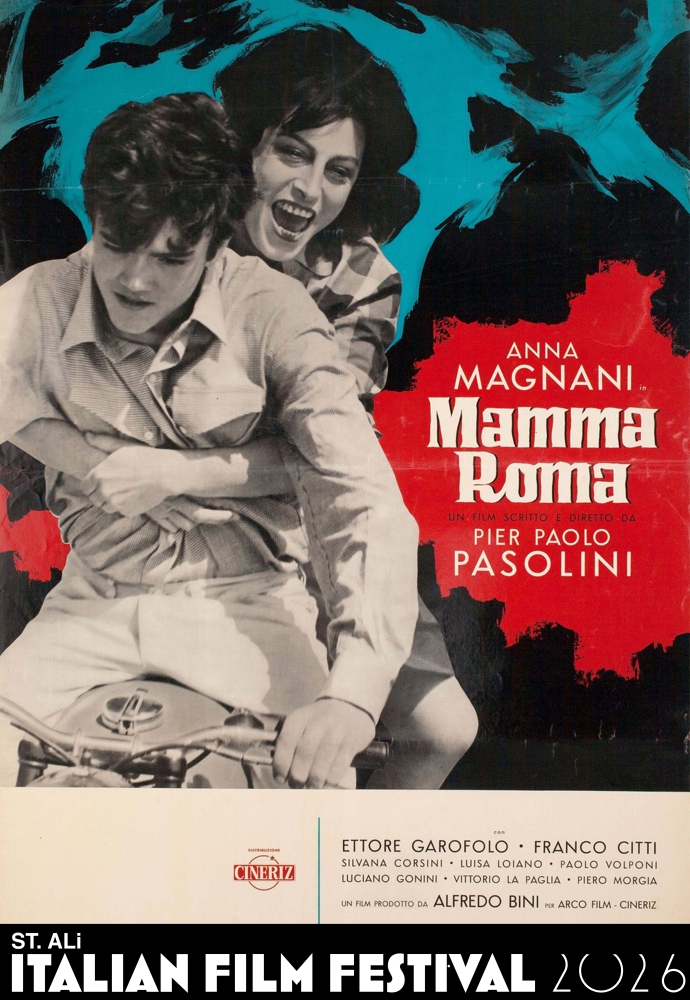
Other films in the retrospective include Bellissima (1951) and Mamma Roma (1962).

Other films in the retrospective include Bellissima (1951) and Mamma Roma (1962). Bellissima, directed by Luchino Visconti, follows Maddalena Cecconi, played by Magnani, a fiercely determined working-class nurse who becomes utterly obsessed with turning her plain young daughter, Maria, into a movie star. When legendary director Alessandro Blasetti announces a talent search for a ‘most beautiful” little girl for his next feature film, Maddalena risks everything to secure Maria a spot. Maddalena spends every cent her husband earns on acting coaches, high-end dressmakers, hairdressers, and dance lessons for Maria, draining the family’s modest life savings and sparking explosive fights at home. Desperate for an edge, Maddalena falls prey to Alberto Annovazzi, played by Walter Chiari, a cynical studio insider who promises to use his connections to help Maria in exchange for bribes, exploiting Maddalena’s fierce maternal ambition.

 Along with The Rose Tattoo and Bellissima, Mamma Roma formed the trilogy of Anna Magnani’s legendary “motherhood” roles. Each film uses her explosive, raw energy to look at postwar Italian survival through a different lens. It is commendable that the Italian Film Festival has chosen to highlight Magnani’s career, but two films and a biopic are only a minor tribute to the actress. Access to films for festival organisers is often problematic, and it is a shame the program doesn’t include the third film in the Maternal Sacrifice trilogy, The Rose Tattoo, particularly since the biopic references it so often. Rome: Open City (1945) was another obvious choice for inclusion. Fortunately, modern audiences have plenty of options if they want to see films like these, but a film festival is a great way to see them on the big screen.
When American method actors travelled to Rome in the 1950s and 60s, many sought out Magnani. Her influence continued well after ger death. Meryl Streep frequently cited the emotional transparency of Italian neorealism – spearheaded by Magnani – as a template for letting an audience see a character’s internal suffering. When Kate Winslet showed her natural middle aged working mother body in the TV series Mare of Easttown (2021), she famously refused to let the director airbrush her stomach out of a sex scene. Anna Magnani would have been proud.

James Bond and the Herculean menace in film and TV

Dr Kevin Brianton, Adjunct Senior Research Fellow, La Trobe University, Melbourne, Australia

The actor Daniel Craig delivered a Bond for the 21st Century, but his character has its roots in Greek mythology. Image courtesy of eMoviePoster.

James Bond is a figure that has dominated world cinema for close to 60 years. Underneath the character’s surface charm was a killer with a steely edge. Sean Connery was a marvelous Bond, but his style seemed out of touch in the more jaded politics of our time. The more light-hearted approach of Roger Moore was never going to resonate with today’s audiences. In the latest movie of the series and Daniel Craig’s last outing as Bond, No Time To Die, the creators have looked back to Greek mythology for inspiration – directly or indirectly  –  particularly the figure of Hercules.  After saving the world from yet another evil menace, Bond must decide if he returns to society or dies on the spot. If Bond does choose to return, he will almost certainly destroy his partner and their child.

This dilemma places him in the Greek mythological tradition. Hercules was an illegitimate son of Zeus and despised by Zeus’s wife: the Goddess Hera, who hated Zeus’s infidelities and did everything she could to destroy Hercules – who was a physical manifestation of them. According to one story, after victory in a war, Hercules’ return to his home was shattered by tragedy. Hercules’ wife Megara and their children were about to be murdered by Lycus. Defending his family, Hercules slew Lycus with an arrow. Hera then cursed Hercules to fall into a state of delusion and rage. Hercules shot his children with arrows, believing them to be his rival’s sons and not his own. As Hercules was about to kill his adopted father, Amphitryon, Zeus’s daughter Athena intervened and knocked Hercules unconscious. Upon awakening Hercules realised his crime and was suicidal.

For his misdeeds, Hercules was obliged to become the servant of Eurystheus who imposed the famous twelve labours: the slaying of the Nemean lion; the killing of the nine-headed Hydra of Lerna; the capture of the  Arcadian stag; the capture of the wild Mount Erymanthus boar; the cleaning of the Augean stables; destroying the monstrous Stymphalian man-eating birds; the capture of the mad bull that terrorized the island of Crete; the capture of the man-eating mares; the taking of the girdle of Hippolyte from the queen of the Amazons; the seizing of the cattle of the giant Geryon; the bringing back of the golden apples kept at the world’s end by the Hesperides; and the fetching up from the underworld of the triple-headed dog Cerberus, guardian of its gates. Each of these labours was a monumental demonstration of the strength and cunning of Hercules, but none could erase his familial crimes.

Literary scholar Eugene Waith wrote: “[Hercules]… is a warrior of great stature who is guilty of striking departures from the morality of society in which he lives.” That is the fundamental dilemma of Hercules, and it has proved irresistible to a significant number of writers. In The Herculean Hero in Marlowe, Chapman, Shakespeare and Dryden (1962), Wraith explored plays written in the16th and 17th Centuries that re-interpreted or reworked the Herculean myth for its time.[1] Wraith identified seven plays: Marlowe’s Tamburlaine;Chapman’s Busy D’Ambois; Shakespeare’s Antony and Cleopatra; and Coriolanus; and Dryden’s The Conquest of Granada, Aureng-Zebe and All for Love. Reworking the figure of Hercules is not restricted to these two centuries. Richard Rowland tracked depictions of the Demi-God through to the War on Terror initiated by United States President George W. Bush.[2]

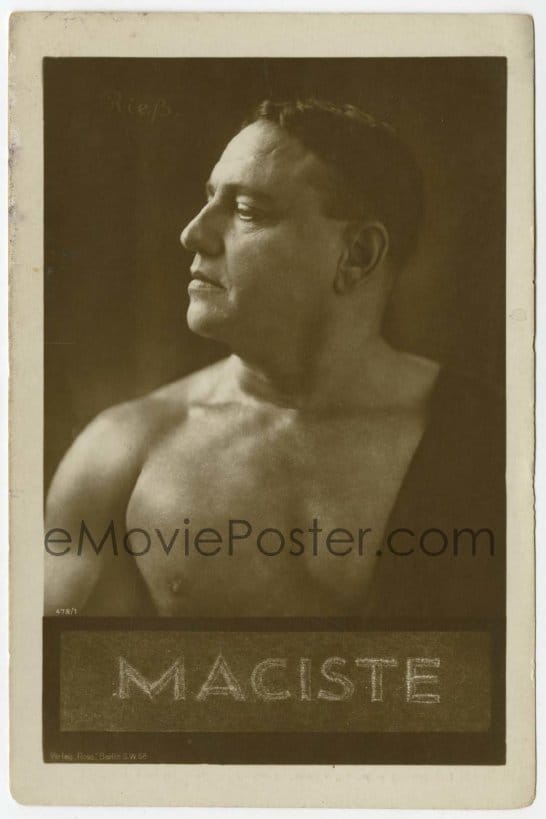
The figure of Hercules remains a common one in popular film. Dating back to Marvelous Maciste in 1915, Bartolomeo Pagano is usually depicted as a Hercules-like figure, utilizing his massive strength to achieve heroic feats that ordinary men cannot. The idea can be seen in many films through to Arnold Schwarzenegger when he appeared in Hercules in New York (1970). In these films, Hercules is a super-muscular heroic figure. Most Hollywood or other cinematic depictions of Hercules highlighted his strength and heroism, downplaying the tragic roots of his feats – he was a straightforward hero. In recent times, a bleaker image of Hercules has emerged. In a 2014 version, Hercules, played by Dwayne Johnson, is haunted by the death of his wife and children.

One of the first figures who presented the strength of Hercules, Marvelous Maciste, was a popular figure in world cinema from 1915. Image courtesy of eMovieposter.

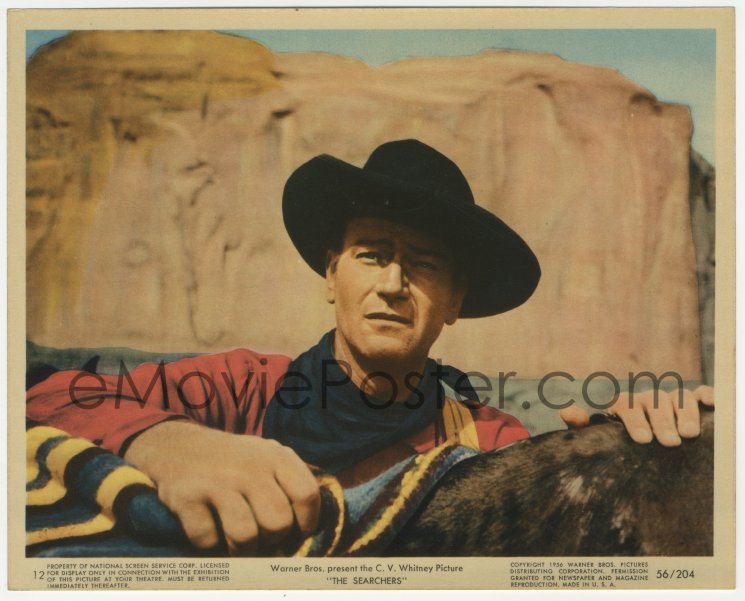
The critical elements of the Herculean figure are some tragedy or tragic event in his past, which he tries to seek redemption by heroic deeds. He is haunted by a past injustice and can never be reconciled to God or man. The western was the main stamping ground for films with this character: the haunted figure redeemed by violence. But one figure dominates over all the rest – it was the character developed for John Wayne in the John Ford film The Searchers. Ethan Edwards rides out of the desert to visit his brother on his Texan ranch. He had fought for the Confederate Army in the Civil War and was unapologetic about his involvement at any level. He is menacing and antisocial, and his presence causes great unease at the Edwards farm. Several hints show that he has slept with his brother’s wife – or wanted to – and the passion lingers.

The tortured vision of Hercules is evident in many Westerns, but it is clearest in John Wayne’s portrayal of Ethan Edwards in The Searchers. Image courtesy of eMovieposter.

While staying at the farm, the Comanche Indians pull a ruse to get the area’s men to chase them for cattle theft. While they are out hunting the thieves out in the desert, the main body or tribe attacks the ranch. Killing all in the household, aside from the two young women who the Comanche keep as future brides, the raiders escape into the broad lands of the desert. The men follow them, but they are brushed off by the vastly superior numbers of the Indians. Edwards and Martin Pauley agree that they will continue to follow them to bring back the young women. As the trip continues, they track down the older girl Lucy who has presumedly been raped and possibly murdered by the Comanche Indians. Edwards is distraught: “I found Lucy back in the canyon. Wrapped her in my coat, buried her with my own hands, I thought it best to keep it from ya.”[3] Some critics note that Wayne repeatedly pushes his knife into the ground while speaking. These actions represent how you clean a knife after a hunting kill. There is a subtle hint that Edwards may have killed Lucy, possibly out of mercy, or perhaps to cover her shame as being violated by the Comanche. If so, we have the Herculean figure in full flight.

As the search continues, Edwards develops a pathological rage against Debbie – who may or may not be his daughter – vowing to kill her. Edwards seems to be furious that his niece – or daughter – could have had sex with the men from the Indian tribe. Edwards’s violent racism is on clear display, and in one scene, he looks at two white girls who are returned from a separate tribe to the community with a face of pathological hatred. His rage against Debbie, played by Natalie Wood, looks unstoppable.

At the same time, as a Herculean figure, Edwards is capable of incredible feats of strength and courage. He tells his companion Marty: “Injun [sic] will chase a thing till he thinks he’s chased it enough. Then, he quits. Same way when he runs. It seems like he never learns there’s such a thing as a critter that’ll just keep comin’ on. So we’ll find ’em in the end, I promise you. We’ll find ’em. Just as sure as a turnin’ of the earth.”[4] Yet, we also know that he plans to kill her when he finds her. This quote shows the dilemma of the Herculean figure, who is capable of great acts, but underpinning it, is a tremendous urge to destroy themselves and those close to them.

Yet Edwards does not kill Debbie. When he finds her, Edwards says she looks like her mother and holds her gently as he rides her home – apparently purged of his demons. The heavy black edges of a door enclose the film’s final shot. The audience looks out to the desert and sees the film’s various characters walk through it to reenter the house to gain entrance into society. Ethan Edwards stands momentarily at the door, considering his options. He has carried his niece Debbie Edwards to the doorway. Upon arrival, Debbie is greeted warmly and walked through the door with the Jorgensen family to rejoin the community. After they have walked through the opening, Edwards takes a hesitant step but then halts when a couple, Martin Pawley and his fiancé Laurie Jorgensen, move through the doorway – and onto an inevitable marriage. Edwards then looks through the door, pauses as if deciding what to do, and reluctantly turns his back to the door. The door closes, and he is stopped from entering a community – he has rejected it in any event. The Herculean figure has no place in the community. [5]

At a point earlier in the film, Edwards had shot out the eyes of an Indian corpse, cursing him to walk between the winds for eternity. He tells the disapproving Reverend, who remonstrates that it means nothing to those practicing the Christian religion, “But what that Comanche believes, ain’t got no eyes, he can’t enter the spirit-land. Has to wander forever between the winds. You get it, Reverend.”[6] As he walks away from the doorway, the wind picks up, and the wind picks up the dust that swirls around him.  It appears that the curse he had inflicted on the Indian had now returned to haunt him. Like James Bond in No Time to Die and the Herculean figures, he will destroy the community if he stays.

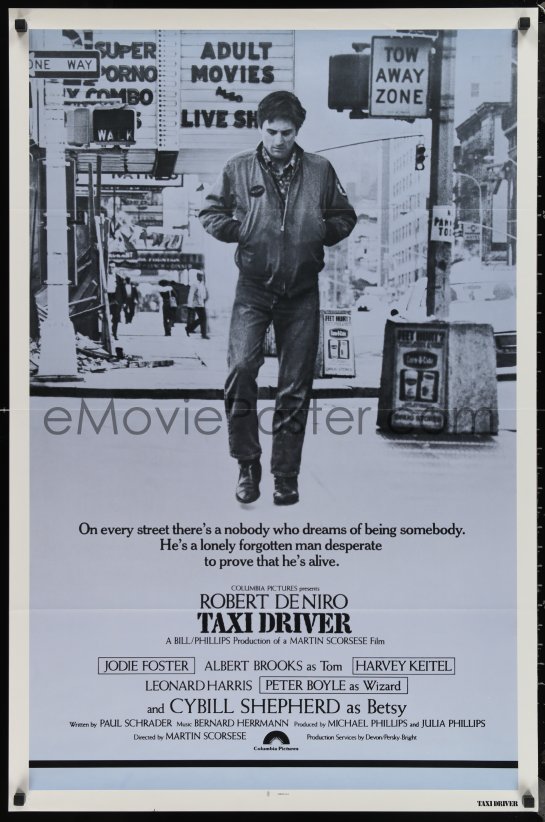
Several characters have followed in the path of Ethan Edwards, particularly Travis Bickle in Taxi Driver (1976), a war veteran who rescues a young woman from gangsters, while flirting with the idea of being a political assassin. Image courtesy of eMoviePoster.

The Searchers has influenced many films. Several characters have followed in the path of Ethan Edwards, particularly Travis Bickle in Taxi Driver (1976), a war veteran who rescues a young woman from gangsters while flirting with the idea of being a political assassin. Bickle totters between being a psychopath and a hero.

Ciro played by Marco D’Amore (Centre.)

The figure is not confined to the cinema. In the epic Italian TV series Gomorrah, Ciro, played by Marco D’Amore is a violent gangster who strangles his wife in a fit of rage. Yet Ciro is also capable of great heroism in freeing an Albanian woman from forced prostitution.

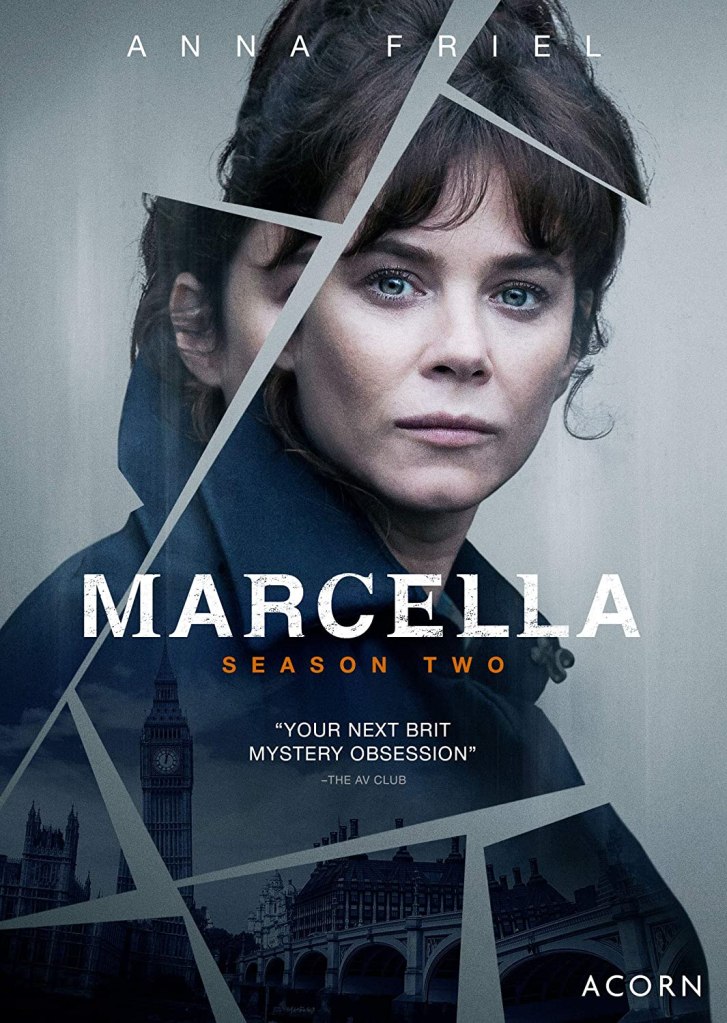
The figure is not confined to men. among several candidates, an exemplary one is in the TV series Marcella (2016 – 2021), where Marcella Backland, played by Anna Friel, is a former London Metropolitan Police Service detective.  She decides to return to work after her husband says he is ending the marriage. Marcella resumes her investigation into the cold case of three unsolved Grove Park murders from a decade earlier, as it appears the serial killer responsible has returned. [7]

A shattered image of a detective. Marcella continues the tradition of Herculean heroes who are destructive to those around them, and capable of massive feats of courage.

The audience finds that Marcella has blackouts for unknown reasons in the first season. She has a disastrous relationship with her husband, a poor one with her children, a drinking problem that often results in physical violence. Despite these dreadful interpersonal relationships, she is a brilliant detective who can solve an incredibly complex murder case.

Marcella is after a serial killer of children in the second season. One with links back to her own family, and she endangers her children in the course of the investigation. Marcella must deal with a wretchedly complex and demanding case. Her former husband Jason is now engaged, putting their children in the middle of a custody battle that quickly becomes ugly. Marcella’s blackouts continue, and she seeks counselling to help her remember what happened during them,  discovering that she accidentally killed her newborn baby and blotted it out of her memory. At this point, the Herculean motif is repeated firmly. Marcella must face the simple fact that she is a more than capable detective but a poor parent. Accepting this sad reality, she eventually signs the papers allowing her husband and new wife to take care of their children.

At the end of the second series, Marcella thinks about suicide but then walks away from the police force. The Herculean hero has no place in any society and even her home. By the third series, she has disappeared from society. Picked up off the street, Marcella assumes a new identity as an undercover officer. Considered dead and with no links to the community, she appears perfect in this new role, where she can redeem herself for her destructive acts against her family.

The Herculean hero continues to fascinate writers in the 21st Century, and will do so as long as film, books and plays are written or performed.


[1] Eugene M. Waith, The Herculean Hero in Marlowe, Chapman, Shakespeare and Dryden. United Kingdom: Columbia University Press, 1962.

[2] Rowland, Richard. Killing Hercules: Deianira and the Politics of Domestic Violence, from Sophocles to the War on Terror. United Kingdom: Taylor & Francis, 2016.

[3] Quotes taken from https://www.gradesaver.com/the-searchers/study-guide/quotes based on script by Frank S. Nugent, and novel by Alan Le May.

[4] Quotes taken from https://www.gradesaver.com/the-searchers/study-guide/quotes based on script by Frank S. Nugent, and novel by Alan Le May.

[5] Some sections of this blog have appeared in https://cinemahistoryonline.com/2021/03/10/news-of-the-world-and-the-searchers/

[6] Quotes taken from https://www.gradesaver.com/the-searchers/study-guide/quotes based on script by Frank S. Nugent, and novel by Alan Le May.

[7] https://www.mysterytribune.com/anna-friel-returns-in-uk-noir-thriller-series-marcella-season-three/

Selling your artistic soul: Halston or Sparks

Kevin Brianton. Adjunct Senior Research Fellow, La Trobe University

Alias Nick Beal (1949) was a clear example of a man selling his soul to gain power and influence. Image courtesy of emovieposter.

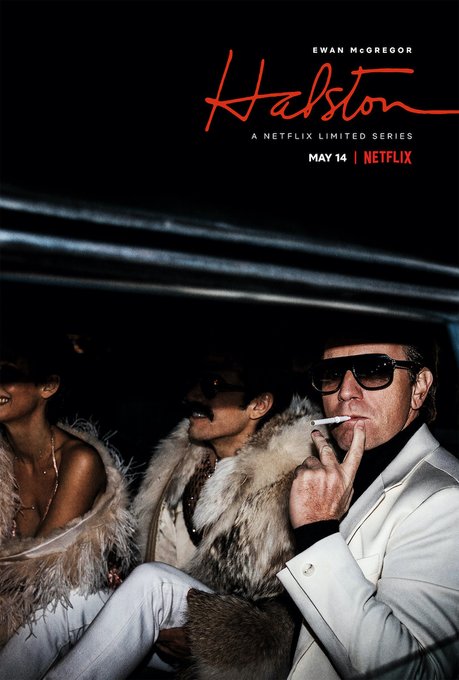
Halston (Netflix) looks to be an ultramodern series as it delves into the high-powered world of New York fashion. However, it has mythical echoes that link back for centuries. Roy Halston Frowick was an American fashion designer who courted fame and fortune in the 1960s and 1970s. His design’s brand name was Halston, and it was noted for its minimal or clean look. Halston charts his rise and fall as a celebrated designer after he rose to fame when Jackie Kennedy wore one of his hats for the JFK Presidential inauguration in 1961.

Halston is based on a biography of the life and work of the fashion designer by Stephen Gaines called Simply Halston.[1] Halston would work closely with the New York rich list and Hollywood and Broadway celebrities to further cement his reputation. In 1973, Halston sold his high-profile design company to Norton Simon Industries, and the business relationship began well when he created a successful fragrance.

The company then produced a wide range of merchandise bearing the brand name. However, Halston began to use drugs, and his work slipped over the years. Norton Simon was taken over, and the Halston division was re-sold. His new corporate masters grew tired of his erratic work habits and lack of concern for profits. He was eventually banished as a designer from the company that bore his name. Halston remained a wealthy man, but he lost control of his designs – and his name – in the process.

Halston poster (Netflix)

In one key scene in Halston, the designer decides to sign over his firm to a corporate backer. It made great financial sense, as he sold his name for a “hundred million dollars.” He could not buy it back again. Change the word “name” to “soul,” and it is clear that Halston has an old-fashioned morality tale at its core. These stories began in the seventh century when Saint Theophilus the Penitent or Theophilus of Adana took the deadly bargain to become a bishop.

These stories have re-emerged at different times through the centuries. The idea of a person choosing to sell their soul for material reward has also been written at various times by Marlowe, Goethe, Wilde and many others.[2] The same idea occasionally appeared in American cinema. Alias Nick Beal (1949) was a clear example of a man selling his soul to gain power and influence. It can also be seen in films such as Faust (1929), The Devil and Daniel Webster (1941),  and Angel on My Shoulder (1946), which all had the theme of a man selling his soul for some form of reward.

A world away from the international fashion scene in New York is a documentary, The Sparks Brothers, which had its cinematic release in January 2021. The documentary film focuses on Ron and Russell Mael, who formed the band Sparks. It is a different success story, as, in contrast to Halston, the Mael Brothers are unlikely ever to sell out. They approach their music with great glee and a wicked sense of humor. Their “very best of sparks” album has a mere 56 songs.

The documentary is directed by Edgar Wright, who is also an unashamed fan of the musicians. The film focuses on the two brothers who formed the Los Angeles-based band when they were young, and the musicians continued making albums and going on tours for the next 50 years. The brothers were the core of this even though their bands formed and reformed several times over the years.

Over five decades, Sparks have constantly been reinventing themselves with a stream of musical ideas. To achieve this level of success and creativity over a long period, the brothers showed a strong and unrelenting work ethic. An interviewee says the brothers worked six or seven days a week for a few years to produce music for little or no return. Even when going well, the vast majority of their work – a total of 25 albums over 50 years – had only limited success. Every so often, they produced an album or a single that had a stronger resonance in the marketplace, but it is clear that the music is their main concern.

It would be naïve to say that the brothers ignore the business side of the equation – they are not artists suffering in a garret. The brothers appear to have a successful lifestyle – but it is certainly not on the same extravagant level as Halston with his New York apartments and first-class flights to Europe. The pair concentrate on the music they have created, and the band has developed tremendous respect throughout the music industry. In comparison to Halston, the brothers show that artistic success does not need to be self-destructive. The only drug issue for the brothers appears to be coffee. According to one interviewee, they go to the same coffee shop each day as a regular break from work – and they work almost every day.

On almost every level, the two works show different approaches to fame and success. In the 21st century, people may not sell their souls, but they can lose their integrity. Ron and Russell Mael appear to be characters from a Horatio Alger novel who get to the top by hard work, perseverance and talent, while Halston is depcited as more of a self-destructive genius. Even so, the artists have some similarities as they all come from relatively humble origins and worked their way up employingtheir abilites. These works provide two takes on the American dream and what compromises you should make to succeed.


[1] Stephen Gaines, Simply Halston, Independently published, 19 May 2021.

[2] Hedges, Inez. Framing Faust: Twentieth-Century Cultural Struggles. Carbondale: Southern Illinois University Press, 2006. Accessed July 13, 2021. ProQuest Ebook Central.