James Bond and the Herculean menace in film and TV

Dr Kevin Brianton, Adjunct Senior Research Fellow, La Trobe University, Melbourne, Australia

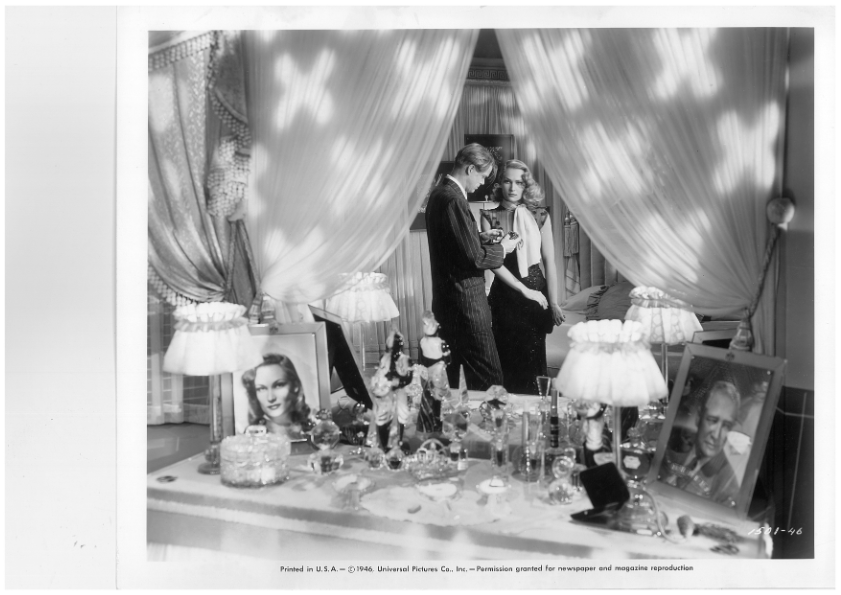
The actor Daniel Craig delivered a Bond for the 21st Century, but his character has its roots in Greek mythology. Image courtesy of eMoviePoster.

James Bond is a figure that has dominated world cinema for close to 60 years. Underneath the character’s surface charm was a killer with a steely edge. Sean Connery was a marvelous Bond, but his style seemed out of touch in the more jaded politics of our time. The more light-hearted approach of Roger Moore was never going to resonate with today’s audiences. In the latest movie of the series and Daniel Craig’s last outing as Bond, No Time To Die, the creators have looked back to Greek mythology for inspiration – directly or indirectly  –  particularly the figure of Hercules.  After saving the world from yet another evil menace, Bond must decide if he returns to society or dies on the spot. If Bond does choose to return, he will almost certainly destroy his partner and their child.

This dilemma places him in the Greek mythological tradition. Hercules was an illegitimate son of Zeus and despised by Zeus’s wife: the Goddess Hera, who hated Zeus’s infidelities and did everything she could to destroy Hercules – who was a physical manifestation of them. According to one story, after victory in a war, Hercules’ return to his home was shattered by tragedy. Hercules’ wife Megara and their children were about to be murdered by Lycus. Defending his family, Hercules slew Lycus with an arrow. Hera then cursed Hercules to fall into a state of delusion and rage. Hercules shot his children with arrows, believing them to be his rival’s sons and not his own. As Hercules was about to kill his adopted father, Amphitryon, Zeus’s daughter Athena intervened and knocked Hercules unconscious. Upon awakening Hercules realised his crime and was suicidal.

For his misdeeds, Hercules was obliged to become the servant of Eurystheus who imposed the famous twelve labours: the slaying of the Nemean lion; the killing of the nine-headed Hydra of Lerna; the capture of the  Arcadian stag; the capture of the wild Mount Erymanthus boar; the cleaning of the Augean stables; destroying the monstrous Stymphalian man-eating birds; the capture of the mad bull that terrorized the island of Crete; the capture of the man-eating mares; the taking of the girdle of Hippolyte from the queen of the Amazons; the seizing of the cattle of the giant Geryon; the bringing back of the golden apples kept at the world’s end by the Hesperides; and the fetching up from the underworld of the triple-headed dog Cerberus, guardian of its gates. Each of these labours was a monumental demonstration of the strength and cunning of Hercules, but none could erase his familial crimes.

Literary scholar Eugene Waith wrote: “[Hercules]… is a warrior of great stature who is guilty of striking departures from the morality of society in which he lives.” That is the fundamental dilemma of Hercules, and it has proved irresistible to a significant number of writers. In The Herculean Hero in Marlowe, Chapman, Shakespeare and Dryden (1962), Wraith explored plays written in the16th and 17th Centuries that re-interpreted or reworked the Herculean myth for its time.[1] Wraith identified seven plays: Marlowe’s Tamburlaine;Chapman’s Busy D’Ambois; Shakespeare’s Antony and Cleopatra; and Coriolanus; and Dryden’s The Conquest of Granada, Aureng-Zebe and All for Love. Reworking the figure of Hercules is not restricted to these two centuries. Richard Rowland tracked depictions of the Demi-God through to the War on Terror initiated by United States President George W. Bush.[2]

The figure of Hercules remains a common one in popular film. Dating back to Marvelous Maciste in 1915, Bartolomeo Pagano is usually depicted as a Hercules-like figure, utilizing his massive strength to achieve heroic feats that ordinary men cannot. The idea can be seen in many films through to Arnold Schwarzenegger when he appeared in Hercules in New York (1970). In these films, Hercules is a super-muscular heroic figure. Most Hollywood or other cinematic depictions of Hercules highlighted his strength and heroism, downplaying the tragic roots of his feats – he was a straightforward hero. In recent times, a bleaker image of Hercules has emerged. In a 2014 version, Hercules, played by Dwayne Johnson, is haunted by the death of his wife and children.
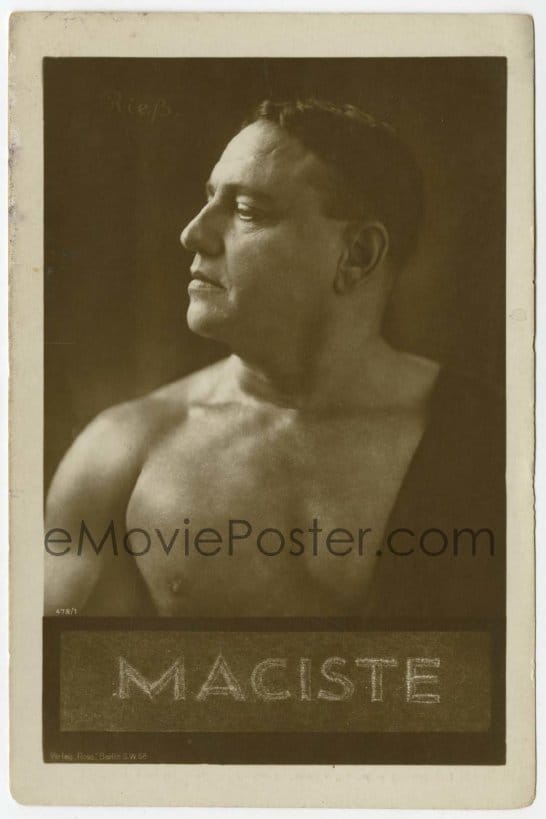
One of the first figures who presented the strength of Hercules, Marvelous Maciste, was a popular figure in world cinema from 1915. Image courtesy of eMovieposter.

The critical elements of the Herculean figure are some tragedy or tragic event in his past, which he tries to seek redemption by heroic deeds. He is haunted by a past injustice and can never be reconciled to God or man. The western was the main stamping ground for films with this character: the haunted figure redeemed by violence. But one figure dominates over all the rest – it was the character developed for John Wayne in the John Ford film The Searchers. Ethan Edwards rides out of the desert to visit his brother on his Texan ranch. He had fought for the Confederate Army in the Civil War and was unapologetic about his involvement at any level. He is menacing and antisocial, and his presence causes great unease at the Edwards farm. Several hints show that he has slept with his brother’s wife – or wanted to – and the passion lingers.
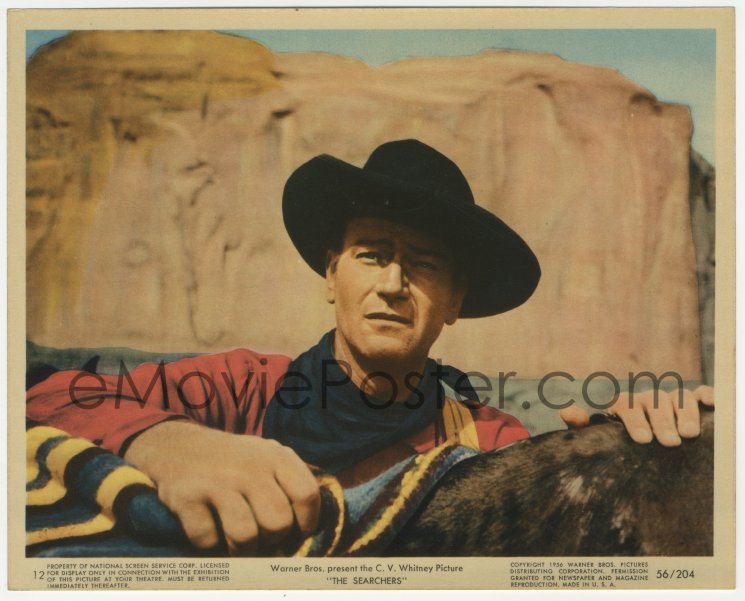
The tortured vision of Hercules is evident in many Westerns, but it is clearest in John Wayne’s portrayal of Ethan Edwards in The Searchers. Image courtesy of eMovieposter.

While staying at the farm, the Comanche Indians pull a ruse to get the area’s men to chase them for cattle theft. While they are out hunting the thieves out in the desert, the main body or tribe attacks the ranch. Killing all in the household, aside from the two young women who the Comanche keep as future brides, the raiders escape into the broad lands of the desert. The men follow them, but they are brushed off by the vastly superior numbers of the Indians. Edwards and Martin Pauley agree that they will continue to follow them to bring back the young women. As the trip continues, they track down the older girl Lucy who has presumedly been raped and possibly murdered by the Comanche Indians. Edwards is distraught: “I found Lucy back in the canyon. Wrapped her in my coat, buried her with my own hands, I thought it best to keep it from ya.”[3] Some critics note that Wayne repeatedly pushes his knife into the ground while speaking. These actions represent how you clean a knife after a hunting kill. There is a subtle hint that Edwards may have killed Lucy, possibly out of mercy, or perhaps to cover her shame as being violated by the Comanche. If so, we have the Herculean figure in full flight.

As the search continues, Edwards develops a pathological rage against Debbie – who may or may not be his daughter – vowing to kill her. Edwards seems to be furious that his niece – or daughter – could have had sex with the men from the Indian tribe. Edwards’s violent racism is on clear display, and in one scene, he looks at two white girls who are returned from a separate tribe to the community with a face of pathological hatred. His rage against Debbie, played by Natalie Wood, looks unstoppable.

At the same time, as a Herculean figure, Edwards is capable of incredible feats of strength and courage. He tells his companion Marty: “Injun [sic] will chase a thing till he thinks he’s chased it enough. Then, he quits. Same way when he runs. It seems like he never learns there’s such a thing as a critter that’ll just keep comin’ on. So we’ll find ’em in the end, I promise you. We’ll find ’em. Just as sure as a turnin’ of the earth.”[4] Yet, we also know that he plans to kill her when he finds her. This quote shows the dilemma of the Herculean figure, who is capable of great acts, but underpinning it, is a tremendous urge to destroy themselves and those close to them.

Yet Edwards does not kill Debbie. When he finds her, Edwards says she looks like her mother and holds her gently as he rides her home – apparently purged of his demons. The heavy black edges of a door enclose the film’s final shot. The audience looks out to the desert and sees the film’s various characters walk through it to reenter the house to gain entrance into society. Ethan Edwards stands momentarily at the door, considering his options. He has carried his niece Debbie Edwards to the doorway. Upon arrival, Debbie is greeted warmly and walked through the door with the Jorgensen family to rejoin the community. After they have walked through the opening, Edwards takes a hesitant step but then halts when a couple, Martin Pawley and his fiancé Laurie Jorgensen, move through the doorway – and onto an inevitable marriage. Edwards then looks through the door, pauses as if deciding what to do, and reluctantly turns his back to the door. The door closes, and he is stopped from entering a community – he has rejected it in any event. The Herculean figure has no place in the community. [5]

At a point earlier in the film, Edwards had shot out the eyes of an Indian corpse, cursing him to walk between the winds for eternity. He tells the disapproving Reverend, who remonstrates that it means nothing to those practicing the Christian religion, “But what that Comanche believes, ain’t got no eyes, he can’t enter the spirit-land. Has to wander forever between the winds. You get it, Reverend.”[6] As he walks away from the doorway, the wind picks up, and the wind picks up the dust that swirls around him.  It appears that the curse he had inflicted on the Indian had now returned to haunt him. Like James Bond in No Time to Die and the Herculean figures, he will destroy the community if he stays.
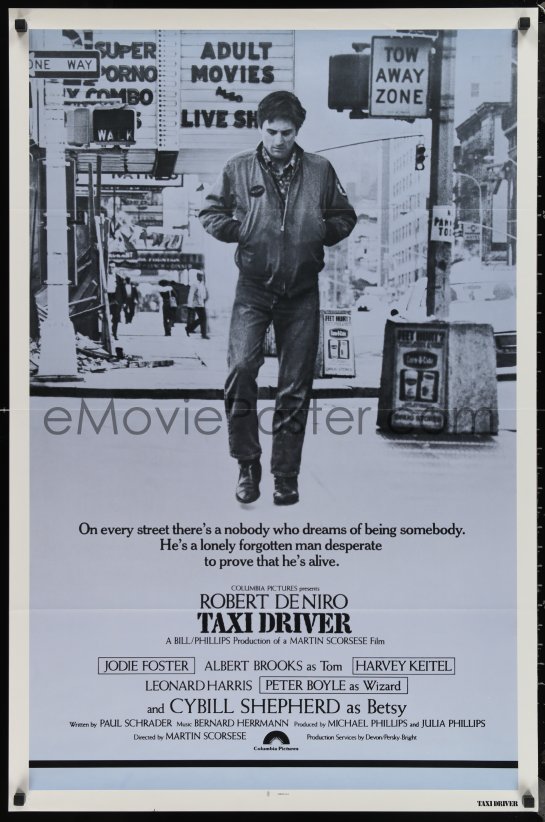
Several characters have followed in the path of Ethan Edwards, particularly Travis Bickle in Taxi Driver (1976), a war veteran who rescues a young woman from gangsters, while flirting with the idea of being a political assassin. Image courtesy of eMoviePoster.

The Searchers has influenced many films. Several characters have followed in the path of Ethan Edwards, particularly Travis Bickle in Taxi Driver (1976), a war veteran who rescues a young woman from gangsters while flirting with the idea of being a political assassin. Bickle totters between being a psychopath and a hero.

Ciro played by Marco D’Amore (Centre.)

The figure is not confined to the cinema. In the epic Italian TV series Gomorrah, Ciro, played by Marco D’Amore is a violent gangster who strangles his wife in a fit of rage. Yet Ciro is also capable of great heroism in freeing an Albanian woman from forced prostitution.

The figure is not confined to men. among several candidates, an exemplary one is in the TV series Marcella (2016 – 2021), where Marcella Backland, played by Anna Friel, is a former London Metropolitan Police Service detective.  She decides to return to work after her husband says he is ending the marriage. Marcella resumes her investigation into the cold case of three unsolved Grove Park murders from a decade earlier, as it appears the serial killer responsible has returned. [7]
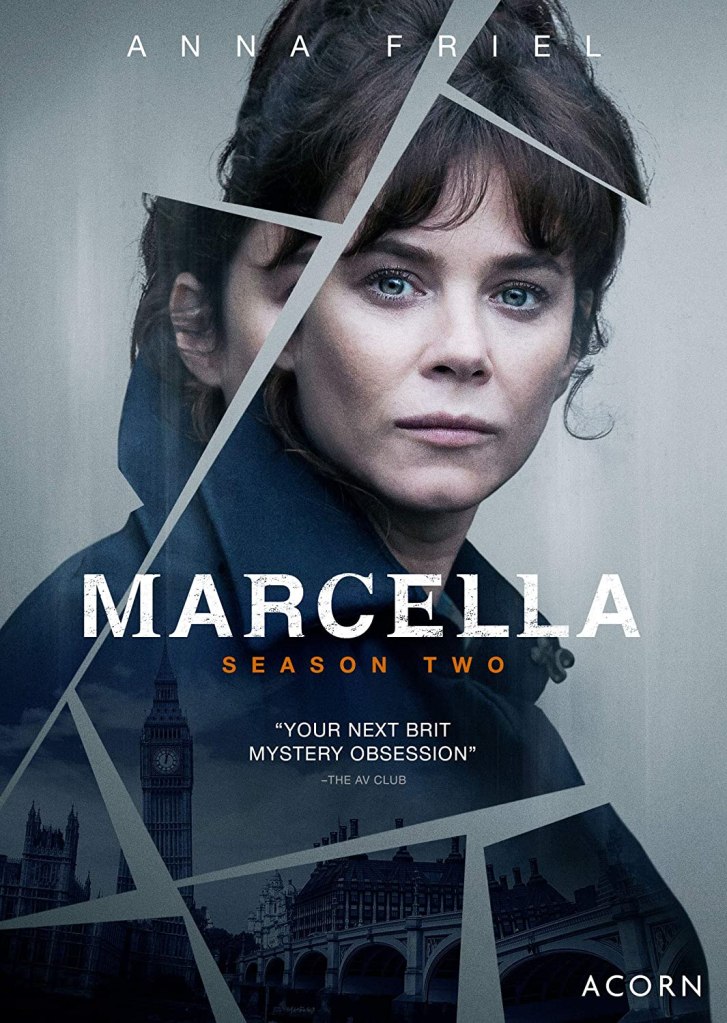
A shattered image of a detective. Marcella continues the tradition of Herculean heroes who are destructive to those around them, and capable of massive feats of courage.

The audience finds that Marcella has blackouts for unknown reasons in the first season. She has a disastrous relationship with her husband, a poor one with her children, a drinking problem that often results in physical violence. Despite these dreadful interpersonal relationships, she is a brilliant detective who can solve an incredibly complex murder case.

Marcella is after a serial killer of children in the second season. One with links back to her own family, and she endangers her children in the course of the investigation. Marcella must deal with a wretchedly complex and demanding case. Her former husband Jason is now engaged, putting their children in the middle of a custody battle that quickly becomes ugly. Marcella’s blackouts continue, and she seeks counselling to help her remember what happened during them,  discovering that she accidentally killed her newborn baby and blotted it out of her memory. At this point, the Herculean motif is repeated firmly. Marcella must face the simple fact that she is a more than capable detective but a poor parent. Accepting this sad reality, she eventually signs the papers allowing her husband and new wife to take care of their children.

At the end of the second series, Marcella thinks about suicide but then walks away from the police force. The Herculean hero has no place in any society and even her home. By the third series, she has disappeared from society. Picked up off the street, Marcella assumes a new identity as an undercover officer. Considered dead and with no links to the community, she appears perfect in this new role, where she can redeem herself for her destructive acts against her family.

The Herculean hero continues to fascinate writers in the 21st Century, and will do so as long as film, books and plays are written or performed.


[1] Eugene M. Waith, The Herculean Hero in Marlowe, Chapman, Shakespeare and Dryden. United Kingdom: Columbia University Press, 1962.

[2] Rowland, Richard. Killing Hercules: Deianira and the Politics of Domestic Violence, from Sophocles to the War on Terror. United Kingdom: Taylor & Francis, 2016.

[3] Quotes taken from https://www.gradesaver.com/the-searchers/study-guide/quotes based on script by Frank S. Nugent, and novel by Alan Le May.

[4] Quotes taken from https://www.gradesaver.com/the-searchers/study-guide/quotes based on script by Frank S. Nugent, and novel by Alan Le May.

[5] Some sections of this blog have appeared in https://cinemahistoryonline.com/2021/03/10/news-of-the-world-and-the-searchers/

[6] Quotes taken from https://www.gradesaver.com/the-searchers/study-guide/quotes based on script by Frank S. Nugent, and novel by Alan Le May.

[7] https://www.mysterytribune.com/anna-friel-returns-in-uk-noir-thriller-series-marcella-season-three/
Andrew Dickos, Street With No Name. A History of the Classic Films Noir, The University of Kentucky Press, 2021. (review)

Geoff Mayer

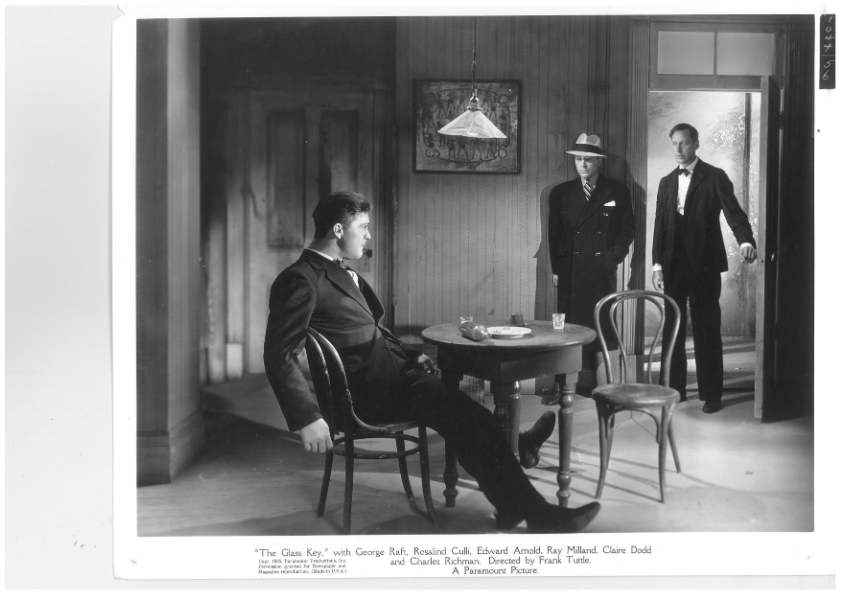
The Glass Key directed by Frank Tuttle. Image courtesy of Mayer Collection.

As a single phenomenon, noir, in my view never existed. That is why no one has been able to define it and why the contours of the larger noir canon in particular are so imprecise. Many of the features associated with noir – the use of voice-over and flashback, the use of high contrast lighting and other ‘expressionistic” devices, the focus on mentally, emotionally and physically vulnerable characters, the interest in psychology, the culture of distrust marking relations between male and female characters, and the downbeat emphasis on violence, anxiety, death, crime and compromised morality – were certainly real ones, but they were separable features belonging to separable tendencies and trends which traversed a wide variety of genres and cycles in the 1940s and early 1950s.

Steve Neale, Genre and Hollywood. [i]

What is film noir? Steve Neale (above) argues it is not a film genre. Essentially, he maintains that it is a discursive critical construction. Yet today, film and television producers and advertisers assume that its core qualities are self-evident as they attempt to exploit its appeal as a marketing strategy for their products, both narrative and non-narrative. It is assumed that the general public now shares the conventional perception of noir. They see it as emanating from those 1940s Hollywood melodramas that deployed, even intermittently, high contrast chiaroscuro lighting that projected deep shadows accompanied by unstable camera set ups that thematically envelope, or trap, the actors within the frame. This visual imagery was often accompanied by a bleak view of American society, especially in the immediate postwar period, that challenged the Hollywood happy ending.  This perception of noir developed for more than forty years. Scholars and film buffs such as Alain Silver and Elizabeth Ward promoted the idea, arguing that not only did a “noir cycle” exist, but it was a “self contained reflection of American cultural preoccupations in film form. In short, it is the unique example of a wholly American film style.”[ii] Silver, with James Ursini, summarised the view of many when they claimed that if “observers of film noir agree on anything, it is on the boundaries of the classic period which begins in 1941 with The Maltese Falcon and ends less than a score of years later with Touch of Evil.”[iii]

Andrew Dickos shares Silver’s position, not Steve Neale’s.  Dickos ends his book by dismissing the complexities of discussing film noir raised by James Naremore in his excellent study, More Than Night. Film Noir In Its Contexts,[iv] by concluding that in conceptualising “classic film noir” “one may almost be forgiven for forgetting that to recognize the film noir as, above all else, a screen genre.”[v] Naremore’s nuanced study, on the other hand, points to the inherent paradox involved in any study by noting that “film noir is both an important cinematic legacy and an idea we have projected onto the past.”[vi]

Dickos, in his 2021 ‘updated edition’ of his 2002 book Street With No Name, rejects suggestions that film noir is a movement, a cycle, a visual style, a tone, or a mood. It is, he asserts, a genre. Yet this is difficult to verify for, unlike the classic Hollywood genres such as the western or the musical or gangster film, “film noir” as a description of a type of Hollywood film is never mentioned in-studio documents as the term was unknown in the United States until, at least, the mid-1950s. In fact, it was nearly another two decades before it was commonly used.  The lack of the term can be verified by a perusal of 1940s Hollywood trade magazines that now routinely label these movies as film noir. The films were described as “private detective melodrama in the hard-boiled manner” (Out of the Past), or “blood-and-thunder melodrama with psychological overtones” (This Gun for Hire) or“mystery melodrama with a psychological twist”(My Name is Julia Ross).[vii]  But never “film noir.”

Dickos, to his credit, points to the shifts in the application of the term when he notes that “film noir” has mutated into categories such as “teen noir” and “femme noir” along with generic hybrids such as “western noir,” “horror noir” and “tech-noir.” [viii] He also points to the continuing popularity and influence of the “classic American Film Noir” on other film cultures, including Scandinavia, Japan, Latin American, and South Korea.”[ix]

In Street With No Name, Dickos argues that “film noir [is) … a body of work conforming to generic standards.”[x] To support this view, he points to the “stylistic distinctiveness that transformed the conventions of the crime and private eye dramas into those peculiar to the noir.”[xi] The ramifications of this, according to Dickos, was a “technique that finally transformed a style into a new narrative expression.”[xii] Its “distinctive visual style” reached its apotheosis, Dickos argues, in the hands of “notable noir filmmakers, usually in collaboration with their cameraman.”[xiii] In this regard, he cites Otto Preminger and Joseph La Shelle, Anthony Mann and John Alton, Robert Siodmak and Woody Bredell, and Robert Aldrich and Joseph Biroc. In many ways, this highlights Dickos’s real interest throughout the book on the celebration of selected “auteurs” and the development of particular themes. To provide a conceptual framework for this idea, he consistently argues that film noir constituted a “genre status,”[xiv] characterised by  a range of “structural elements of noir narrative.”[xv] These elements are:[xvi]

  • an urban setting or at least an urban influence.
  • a modern, twentieth-century setting.
  • a lack of comic structure (the notable exception according to Dickos is Billy Wilder’s Double Indemnity).
  • a denial by its main characters of conventional social and domestic happiness through unattainability or refusal.
  • an assertion of individuality as defined by the killing of someone in defiance of modern social mores and law.
  • the iconic representation of the features mentioned above by a definitive star of the screen or through a striking performance by a less recognized screen star or actor.

Dickos then proceeds to compile a list of “conventions of the film noir [that are] ensconced in its narrative structure, which make it distinctive yet are not exclusive to the noir.”[xvii]

These are:[xviii]

  • the femme fatale or her counterpart,  the homme fatal.
  • active/sexual and passive/nonsexual characters.
  • the use of voice-over narration and the flashback – usually from the male point of view.
  • frequent use of portraits.
  • telephones.
  • temporary amnesia, plus nightmares or daydreams.
  • cars as indispensable devices of escape.
  • apartments or bungalows.
  • art and its collection suggesting corruption, effeteness, and a European sensibility.
  • the inclusion of nightclubs and lounges, neon signs, cigarette lighters, trench coats, hotel rooms, both cheap and elegant, pool halls, boxing rings, gyms, guns, and smart fashion.
My Name is Julia Ross (1945) is one film that evades Dickos’s taxonomy. Courtesy of the Mayer collection.

This attempt at generic taxonomy is brave on  Dickos’s part as such attempts, even with more clearly defined genres such as the western, are always subject to contradictions and film outriders that its precise boundaries. Hence,  it is relatively easy to cite films generally classified as noir that evade most of these attributes. For example, My Name is Julia Ross (1945) or Ivy (1947) or So Evil My Love (1948), the last two films set in 19th Century England.

Dickos hints at a more sophisticated approach in his preface to the updated edition when he refers to film noir as “Melodrama narratives … cast in a noir haze.”[xix] This notion is intriguing, and it is a pity that the “updated edition” never explores this idea.  The main reason for this lapse is that the 2021 “updated edition” is the same book published in 2002. The only change is a two-page (new) preface replacing the seven-page preface in the 2002 edition. In fact, the 2002 book provides better value as the hardcover edition is printed of high-quality paper which showcases the excellent selection of images in a much better way than the 2021 edition.

The rest is this review is, by necessity, a review of the 2002 book – as nothing has changed. At least the publishers should have taken the trouble to disguise this a little better. For example, the index to the 2021 edition notes that Double Indemnity is supposedly mentioned on pages xiii and xiv. The trouble is that there are no pages xiii and xiv in the new edition – only in the 2002 edition. If one compares the 2021 edition with the 2002 edition, it reveals that both editions are identical –  the text is exactly the same, and the images are the same.

While Dickos mentions Jean Renoir’s 1938 film La Bête Humaine in his section on French cinema in the 1930s, he fails to extend this by discussing the Hollywood remake sixteen years later of Renoir’s film, titled Human Desire. Image courtesy of Mayer Collection.

Some brief comments on the 2002/2021 books. Dickos’s study, while not a comprehensive history of film noir, includes a valuable discussion of German Expressionism in the period from 1919 to 1933, along with trends in French Cinema in the 1930s. He sees these film cultures providing the genesis of what became known as “classic American film noir” a decade later.  However, even here, one suspects that Dickos is more interested in celebrating the virtues of selected European “auteurs” than providing a comprehensive outline of the precursors of American film noir. For example, the section on “German Expressionism and the roots of Film Noir” gives Dickos a licence to trace selected German and Hollywood films directed by Fritz Lang. But there is a notable and strange omission. While Dickos mentions Jean Renoir’s 1938 film La Bête Humaine in his section on French cinema in the 1930s, he fails to extend this by discussing the Hollywood remake sixteen years later of Renoir’s film, titled Human Desire. –  Even though it was directed by Fritz Lang, who is one of the directors singled out for comprehensive discussion of both his German films and his Hollywood films. And despite the fact that Human Desire featured two actors – Gloria Grahame (In a Lonely Place) and Glenn Ford (Gilda) – often considered as iconic noir actors. This omission is a pity as the basic plot of Human Desire is archetypal noir – a sensual woman (Gloria Grahame) attempts to seduce a seemingly naive train driver Glenn Ford to murder her abusive husband, played by Broderick Crawford. What makes this film especially interesting is the battle between the head of Columbia, Harry Cohn, and Lang over the presentation of the femme fatale. Cohn wanted a familiar, stereotypical image of the fatal woman who sexually manipulates a gullible male into committing murder. The commercial advantages of this association between sex and murder were self-evident to Cohn.  However, Lang, and screenwriter Alfred Hayes, resisted this simplistic presentation. They proceeded to show a mature, complex presentation of this stereotypically familiar character by transforming her into both seductress and victim. She is a sensual woman who is also a victim of physical abuse from her husband and sexual abuse as a teenager. Along the way, Lang and Hayes also emasculated the seemingly attractive male victim (Ford) by presenting him as vacuous, cold, and lecherous.

A valuable aspect of  Dickos’s book is his acknowledgment of the important contribution by Cornell Woolrich in considerations of film noir and, specifically, the shifts in the Hollywood crime melodrama in the 1940s. Although Dickos groups Woolrich with more traditional writers of hard-boiled fiction, such as Dashiell Hammett and Raymond Chandler, Woolrich was not interested in police detectives, private eyes, or continuing characters. Instead, his focus was on traumatised victims, not hard-boiled heroes. In his two dozen-plus novels and more than 200 short stories and novelettes,  Woolrich’s protagonists were mostly ordinary people trapped in a hostile universe, a world ruled by chance and fate.  His stories, as Frank Krutnik notes, were characterised by “tortuously passages of masochistic delirium.”[xx] Dickos captures this facet of Woolrich’s fiction when he writes:

Cornell Woolrich wrote of people caught in circumstances, arbitrary and destabilizing, that provoked fear, often terror, and the feeling of utter helplessnes in the face of it. No writer describes this interior world more vividly than he, and the psychology of Woolrich’s characters, often facile in itself, is complicated by the subtle modulations of impending dread, of that sinking feeling that always anticipates doom.[xxi]

Dickos ends his impressive overview of Woolrich’s fiction by cursorily lumping together more than fifteen film adaptations with an inaccurate comment that they were “compellingly transcribed” Image courtesy of Mayer Collection.

However, Dickos ends his impressive overview of Woolrich’s fiction by cursorily lumping together more than fifteen film adaptations with an inaccurate comment that they were “compellingly transcribed”[xxii] to the screen. Unfortunately, the Hollywood adaptations of The Black Curtain, renamed Street of Chance by Paramount, Phantom Lady, Black Alibi, renamed The Leopard Man by RKO, Black Angel, The Black Path of Fear, renamed The Chase, “And So to Death,” also known as “Nightmare,” which was filmed as Fear in the Night, “I Wouldn’t Be in Your Shoes,” and I Married a Dead Man, filmed as No Man of Her Own by Paramount, were generally emasculated by Hollywood screenwriters and producers. They often imposed a moral closure to stories that refused to endorse a sense of justice in an arbitrary world.[xxiii]

The other omission in Dickos’s study, which weakens the book’s claim to be a “History of Classic American Film Noir,” is the treatment of Double Indemnity. While the film is mentioned intermittently throughout the book, mostly in connection with “Barbara Stanwyck’s signature role as Phyllis Dietrichson”[xxiv] and its use of voice-over narration and flashbacks, the film played a significant part in convincing the major studios that it was financially viable to embark on the production of big-budget crime melodramas featuring morally flawed protagonists.  For example, James M.Cain’s novella Double Indemnity was published in 1936, and his first novel, The Postman Always Rings Twice, in 1934. Although MGM purchased the rights to The Postman Always Rings Twice in March 1934 for $25,000, Hollywood censor Joseph  Breen warned the studio not to go ahead with an adaptation. Similarly, following the publication of Double Indemnity in Liberty magazine, interest in the screen rights were expressed by MGM, Paramount, 20th Century-Fox, and Columbia. Again,  Breen opposed any adaptation. However, after Paramount executive Joseph Sistrom purchased the rights for $15,000, the studio submitted a treatment to Breen, who rejected it.

The treatment of Double Indemnity is an ommission of the book. Image courtesy of Mayer Collection.

Nevertheless, Billy Wilder persisted, especially after Raymond Chandler was hired to assist him to develop a screenplay from Cain’s story. The critical and commercial success of the film was a landmark moment in the history of Hollywood cinema. The film marked a major challenge to censorship practices at that time as the 1930 Production Code stipulated that “no picture shall be produced which will lower the moral standards of those who see it. Hence the sympathy of the audience shall never be thrown to the side of crime, wrongdoing, evil, or sin.” Wilder and Chandler changed that. Double Indemnity’s critical and commercial success resulted in a veritable flood of submissions to Breen’s office for similar films – including one from the most conservative major studio, MGM, to finally adapt The Postman Always Rings Twice. Fred Stanley, writing in The New York Times in 1944 after the release of Double Indemnity,  highlighted the importance of the film in initiating a dark, “red meat” cycle involving “certain types of storied sordidness and ultra-sophistication.”[xxv]

Dr. Geoff Mayer is a former Head of School, La Trobe University and Chair of the Cinema Studies Department and the author of Hollywood’s Melodramatic Imagination. Film Noir, the Western and Other Genres from the 1920s to the 1950s (Jefferson, McFarland, 2021).        


[i] Steve Neale,  Genres and Hollywood (London, Routledge, 2000), 173-174.

[ii]  Alain Silver and Elizabeth Ward (eds.), Film Noir. An Encyclopedic Reference to the American Style New York, The Overlook Press, 1992) 1.

[iii] Alain Silver and James Ursini, “Introduction,” in Alain Silver and James Ursini, Film Noir Reader (New York, Limelight Editions, 1996) 11.

[iv] James Naremore, More Than Night. Film Noir In Its Contexts (Berkeley, University of California Press,  1998).

[v] Andrew Dickos, Street With No Name. A History of the Classic American Film Noir (Lexington, The University Press of Kentucky, 2021), 282.

[vi] Naremore, 11.

[vii] See Steve Neale, ‘Melo Talk: On the Meaning and Use of the Term “Melodrama” in the American Trade Press, the velvet light trap, Number 32, Fall 1993, note 28, page 78.

[viii] Dickos, x

[ix] Ibid.

[x] Dickos, 4.

[xi] Ibid., 5.

[xii] Ibid.

[xiii] Ibid., 6.

[xiv] Ibid.

[xv] Ibid.

[xvi] See Ibid., 6 -7.

[xvii] Ibid., 7.

[xviii] See Ibid., 7-8.

[xix] Ibid., x.

[xx] Frank Krutnik, In a Lonely Street. Film noir, genre, masculinity (London, Routledge, 1991) 41.

[xxi] Dickos, 99.

[xxii] Ibid., 103.

[xxiii] See Hollywood’s Melodramatic Imagination. Film Noir, the Western and Other Genres from the 1920s to the 1950s (Jefferson, McFarland, 2021) 228-243.

[xxiv] Ibid., 157.

[xxv] Quoted in Sheri Chinen Biesen, Blackout. World War 11 and the Origins of Film Noir (Baltimore, The Johns Hopkins University Press, 2005) 97.