Laurent Bouzereau, Becoming Hitchcock: The Legacy of Blackmail, TCM

Kevin Brianton

Senior Adjunct Research Fellow, La Trobe University, Melbourne
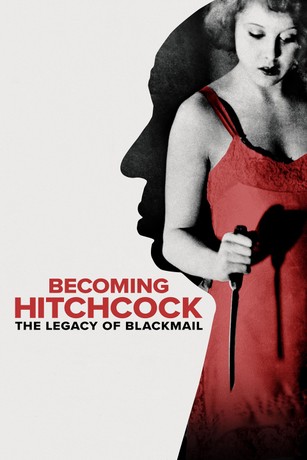
Becoming Hitchcock: The Legacy of Blackmail (2022) holds a unique and important place within Hitchcock scholarship. The feature-length documentary examines Blackmail (1929), Hitchcock’s first sound film. This movie is now seen as a key work of British cinema. However, as the title suggests, Bouzereau’s project argues that many of Alfred Hitchcock’s signature directing techniques were developed with this film.

The most obvious criticism of the documentary is that Blackmail was not his first Hitchcockian film. In the 1920s, Hitchcock worked on many different types of films, but the origin of the title “Master of Suspense” is often associated with The Lodger (1926). Hitchcock himself considered it his first film in the genre that would define his career. Many agree with him. The film historian Henry K. Miller has championed The Lodger as his starting point, most recently in the book of essays Re-Viewing Hitchcock (2025), describing it as “Hitchcock’s First True Movie.” Miller outlines numerous critics over the decades who argued along similar lines. For example, Paul Rotha, in the influential The Film Till Now (1930), saw the pair of films as key stepping stones in Hitchcock’s development. In sharp contrast to these views, Bouzereau offers a compelling counterpoint through this documentary.

The film’s plot centres on Alice White, played by Anny Ondra, the daughter of a London shopkeeper, who quarrels with her police detective boyfriend, Frank Webber, played by John Longden. In a rebellious mood, she goes out with a charming artist, Mr. Crewe, played by Cyril Ritchard, who takes her to his studio. When he tries to rape her, Alice kills him in self-defense with a bread knife. The next day, the body is discovered, and Frank is assigned to investigate the murder. He finds Alice’s glove at the scene and realizes she is the killer. He secretly covers up that evidence. However, a petty criminal named Tracy, played by Donald Calthrop, witnesses Alice with the artist and gets the other glove as proof. He tries to blackmail both Alice and Frank. When Tracy’s scheme falls apart, he is suspected of the murder. A dramatic chase happens through the British Museum. The film ends with Tracy’s accidental death and an uneasy resolution: Alice feels she must confess to the authorities, but she is stopped at the last moment. Frank and Alice must face the consequences of their obstruction of justice, leaving their future uncertain.

Hitchcock’s early work is explored through this documentary, revealing various aspects of his emerging cinematic talent. The first part focuses on the transition from silent to sound cinema. Blackmail was released in both versions since it was made right at this pivotal moment in 1929. Hitchcock’s impressive ability to adapt to new technology is clear in the film’s most famous scene, where Alice hears a neighbour’s gossip that gradually becomes a distorted chorus repeating the word “knife.” Despite the challenges of this awkward new technology, Hitchcock showed he could be innovative. Others faced even greater difficulties. The female lead, Anny Ondra, had a strong Czech accent, so she had to be dubbed for the sound version. Ultimately, she moved to Germany to continue her acting career.

The documentary then shifts to other recurring themes in Hitchcock’s films that would dominate his cinema for the next 40 years. The first theme was that of an accused, but innocent person. The documentary shows that, starting with this work, themes of personal guilt emerge and are projected onto others. Alice’s guilt is indirectly transferred when her boyfriend, a Scotland Yard detective, frames the blackmailer for the murder. A blurred line then exists between justice and vigilante action. In Blackmail, the “hero” breaks the law, complicating the moral landscape. In his later work, Hitchcock repeatedly questions the nature of crime and punishment. In Dial M for Murder (1954), the husband plans the “perfect crime,” and almost defeats the legal system. In Strangers on a Train (1951), Bruno acts on Guy’s suppressed desire. In Psycho (1960), Norman Bates disposes of a body to protect his ‘mother.’

Alice becomes caught in a web of shame and fear while another innocent person is hunted. This theme is arguably central to Hitchcock’s work. From The 39 Steps (1935) through to North by Northwest (1959), Hitchcock enjoyed placing an ordinary individual in extraordinary, dangerous situations where they are wrongly accused or implicated. The documentary shows that these ideas re-emerge in I Confess (1953), where a priest bears guilt for a murder. In Vertigo (1958), another police detective, Scottie, falsely feels guilt over Madeleine’s death while being manipulated by others.

Two final points support the idea that it is Hitchcock’s first true film. Alice is almost certainly the prototype of the “Hitchcock Blonde.” She is attractive, takes a risk by entering the artist’s studio, and her actions drive the entire story. Alice is a more vulnerable, morally complex character caught in a web of her own making. The documentary examines the famous scene where Alice is assaulted by the artist, which, for the time, nearly crossed the boundaries of sexual violence. It marks the beginning of the glamorous, elegant, often cold or mysterious blonde, a figure central to the film’s themes of danger and desire: Madeleine/Judy in Vertigo, Eve Kendall in North by Northwest, and Melanie in The Birds. They are both objects of fascination and threats.

The first use of landmarks in a climactic chase occurred in this film, a technique that would become a staple of his cinema. In Blackmail, it takes place on the dome of the British Museum, a public landmark, which is transformed into a tense, surreal arena for a chase and a death. His fellow director, Michael Powell, claims some credit for suggesting the idea. Hitchcock would go on to famously use iconic locations to heighten suspense: Mount Rushmore and the United Nations building in North by Northwest, and the Statue of Liberty in Saboteur (1942).

In the documentary, Blackmail serves as a blueprint for the Hitchcock universe. It highlights his central obsession: the fragility of ordinary life and how quickly a simple decision can turn a person into a nightmare of guilt, accusation, and moral confusion, all conveyed through a masterful, subjective visual style. Overall, the film emphasizes the idea of an auteur’s work. The title Becoming Hitchcock is straightforward, implying a destined path for the British director. This perspective overlooks the more chaotic, chance-driven nature of artistic growth. Opportunities appeared, and Hitchcock seized them fully. The influence of writers, actors, and camera operators is quietly downplayed. While his wife Alma Reville, producers, and screenwriters are mentioned, the documentary’s narrative focuses on Hitchcock’s individual genius overcoming all obstacles. For film students, it offers an engaging introduction to the foundational elements of Hitchcock’s cinema. Bouzereau’s Becoming Hitchcock: The Legacy of Blackmail is a well-crafted piece of popular film history that succeeds in its primary goal: establishing Blackmail as the foundational text of Hitchcock’s career and demonstrating, with compelling visual evidence, the development of his signature style.

A note on availability: Blackmail was restored in 2024, building on earlier preservation work. Bouzereau’s documentary is featured on DVD sets of Hitchcock’s silent films, on various streaming platforms. It has been broadcast on channels like TCM. It was screened at the British Film Festival at Palace Cinemas in Australia.

“The Philosophy of the Coen Brothers” (University Press of Kentucky, 2008) by Mark T. Conard

Dimitris Passas

Standing in the intersection between philosophical reasoning and popular culture, the series of books that have been published under the general title “The Philosophy of Popular Culture” delves into the deep waters of linking abstract thought with cultural theory and the result is a sequence of scholastic inquiries on a multitude of subjects, always remaining within the field of the ever-growing pop culture phenomenon. In addition to volumes devoted to the work of eminent artists such as Stanley Kubrick, Martin Scorsese, David Lynch, and David Cronenberg, there are also studies on the neo-noir movement in cinema, the legendary TV show X Files, and even on the relation between philosophical inquiry and sports such as tennis and football. Due to my particular fondness for the work of Joel and Ethan Coen, two true auteurs whose films left their distinct stamp on modern cinema, I chose to begin my first book in the series, that is The Philosophy of the Coen Brothers. It consists of a collection of 16 essays, divided into four parts each focusing on a more specified subject matter, and it is edited by Mark T. Conard who also authors the brief introduction in which we learn some general information regarding each section. Regarding the purpose of this collection, Conard writes: “This work investigates the philosophical themes and underpinnings of the films of these master filmmakers and uses the movies as a vehicle for exploring and explicating traditional philosophical ideas”.

Conard stresses that despite the presentation of several hard-to-grasp in their entirety philosophical concepts, the book is accessible to everyone and no former knowledge of the history of Western thought is required in order to comprehend the essays. Nevertheless, many readers, as I realized by reading some online reviews about the book, seem to think that there are some parts where the scholarly aspect is overtly heavy-handed and that was the reason why their ratings were mediocre. I was fortunate enough to be familiar with the majority of philosophers mentioned in the essays as my post-graduate studies were on philosophy, so I am not the most fitting individual to judge whether or not The Philosophy of the Coen Brothers is a widely accessible collection. Throughout the pages, one comes across the ideas and concepts conceived by some of the most renowned intellectuals that marked philosophical thought such as Aristotle, Plato, Friedrich Nietzsche, Martin Heidegger, Søren Kierkegaard, and the proponents of Existentialism, and numerous others whose influence on the discipline of philosophy is colossal and unanimously acknowledged. The authors of each essay are prudent enough to present their arguments simply and concisely and even obscure notions such as the Heideggerian “Dasein” are treated in such a way that a layman can understand their use in the specific context.

The Coen brothers’ oeuvre consists of more than 25 films and in the majority of them they are also screenwriters. Their debut took place in 1984 with the release of the iconic neo-noir Blood Simple, a film that adopted some of the most recognizable classic noir tropes combined with a touch of irony and dark humor that made it easier to stand apart from its predecessors. From then on, the duo has written and directed films of any genre and in their filmography, we come across gangster films, comedies, modern westerns, and most importantly some of the most shining examples of the neo-noir movement that helped to define and evolve the, relatively new, genre. The majority of essays featured in this collection analyze the Coens’ work from the perspective of the distinction between the two types of noir (classic and neo) and the reader obtains a comprehensive idea regarding the nuances between them. In the second essay of the first part, titled “The Human Comedy Perpetuates Itself: Nihilism and Comedy in Coen Neo-Noir”, Thomas S. Hibbs examines the effects of nihilism and pessimism in Coens’ films, employing Friedrich Nietzsche’s views on the subject in order to make clear his point that the fictional characters living and acting in imaginary settings in the brothers’ movies essentially inhabit an absurd universe, that is a world “divested of value, a world without hierarchies of meaning, a world of stark individual freedom”. The lack of any inherent purpose in the world had been one of the fundamental teachings of the Existentialists, a school of thought that underlined the desperation of a man who has lost any fixed point that would allow him to view life from a brighter perspective. Camus defines the absurd as “the divorce between the mind that desires and the world that disappoints, my nostalgia for unity, this fragmented universe and the contradiction that binds them together”.

While Nietzsche agrees with the Existentialists concerning the essential meaninglessness of the world, he is not advocating hopelessness and he doesn’t lament this fact as he sees it as an opportunity for the spirit to become empowered and for the man to acquire his own identity through the sheer power of his will. If we backtrack for a while, and re-examine the noir pictures of the 1940s and 1950s, we will realize that they embrace a pessimistic worldview as the characters, and especially the protagonist/hero, are bound to submit to the universal truths that will eventually crush him as an individual. In neo-noirs though, there is hope for the new type of hero who will implement his will, through the use of wits or force, to disengage himself from a dire predicament. Thus, he becomes an “active nihilist”, the type of new man who will be at the forefront of what Nietzsche calls the “transvaluation of values” and will construct his identity all by himself in a process that is personal as well as aesthetic. Hibbs summarizes the development of noir in time and the emergence of significant differences as follows: “Neo-noir’s greatest departure from classic noir consists in a turn to aristocratic nihilism. The most resourceful of these characters are in control of the noir plot, using their cunning and artistry to ensnare others”. The new human identity is aesthetically assembled through the endorsement of style.

Style is another aspect that differentiates the two types of noir and refers both to that conerning the characters of the stories and the actual form that the film obtains under the guidance of the director(s). All neo-noir films share the inclination to be too self-conscious in terms of their visual style in a way that prompts the audience to discern a comical side even in the grimmest of stories. Hibbs writes that “in neo-noir, the accentuation of hopelessness and the overtly self-conscious deployment of the artistic technique make the turn to dark comedy nearly inevitable”. Style becomes the actual subject of the film and the audience is invited to the artifice, to get in on the “joke”. Furthermore, as far as the characters are concerned, the acquisition of a personal style is something as essential as breathing to form a coherent sense of identity. In his article, “What Kind of Man Are You? The Coen Brothers and Existentialist Role Playing”, Richard Gaughran writes that “many Coen characters adopt a style, an aggregate of gestures, principally in order to define themselves, to create an identity”. There are more than a few examples of Coens’ protagonists to clarify that theory: “The Dude” Lebowski, Jerry Lundegaard, Everett McGill, the characters in Miller’s Crossing, and even more. Whether it is about the use of the correct hat in Miller’s Crossing, a hat which is inextricably linked with power within the story’s universe, Everett McGill’s obsession with his hair and a specific pomade, or Lebowski’s bohemian exterior, the endorsement of such peculiarities is more than crucial for these characters. In Paul Schrader’s words, it is within the confines of the absurd universe that “the style becomes paramount; it is all that separates one from meaninglessness”. If pre-fixed values are non-existent as nihilism claims, then it is the duty of the individual to build his own style and identity.

The Coens are also famous for their use of setting, and the choice of the right terrain for a modern noir to take place. They avoid big cities and as a rule, they go for small towns in the American countryside, with a clear preference for Texas, and they usually opt for a Western-like wilderness which reflects the cruelty of the stories. Gaughran underscores: “The setting becomes a character at least as important as any of the human characters”, while Paul Schrader, the acclaimed American screenwriter of films such as Taxi Driver and the man who adapted Nikos Kazantzakis’s novel The Last Temptation of Christ into a screenplay, argues, in his essay on film noir that the prominence of setting leads to a fatalistic, hopeless mood as the individual is always subject to its whims and caprices, rendering him a kind of a pawn in a game which he doesn’t understand: “Characters act freely, but they do so within an uncaring, hostile environment, that is, within the realm of the absurd”. The tyranny of the environment that surrounds the character amplifies his existential angst and often leads him to fateful decisions. Take, for example, the Fargo locale. It is a canvas of pure whiteness, so much that some define this movie as “film blanc” (“white movie”), that swallows the protagonist, the meek swindler Jerry Lundegaard who sees his life unravel after he decides to kidnap his own wife in order to get the bulky ransom from his father-in-law. Minnesota and North Dakota offered the best of backdrops for the Coens’ bleak story, one of the best neo-noirs of all time.

But there are also examples of movies such as No Country for Old Men, a film in which the brothers omitted the irony and the dashes of dark humor in favor of a more “serious” approach to the story, that merges the Western setting with the noir plotting. This movie lacks what is termed as “meta-irony”, one of the chief characteristics of the brothers’ earlier movies that refers to the “level of detachment, a sense that their movies were meant to be taken as just stories, that you should not take them too seriously”. “It was the first film created by the Coens that is based on a novel, one of Cormac McCarthy’s most popular works, and “it is and is not a classic western”. In one of the last essays of the collection, Richard Gilmore’s “No Country for Old Men: The Coens’ Tragic Western”, the author, in an attempt to correct an impression acquired by few regarding the importance of the character of Anton Chigurh, argues that this film, and the novel, revives the motifs that were first introduced in the Ancient Greek Tragedy. Chigurh is the embodiment of evil, “a walking abbatoir (…) he is like a modern version of the traditional figure of Death with his scythe”. Nevertheless, the focus is elsewhere. He supports this statement by writing that “what is of interest to McCarthy and the Coens is rather what happens when a good, but flawed, man encounters this force of nature in human guise”. This type of character arc is truly reminiscent of several tragedies where the tragic hero falls victim to his own hubris and gets punished despite, or exactly because, of his flaws and virtues. Llewelyn Moss is the modern tragic hero, a taciturn westerner who stumbles upon the scene of a massive shooting, the result of a drug deal gone wrong, and collects the bag of money that lies there.

By doing this, Llewelyn sets off a mechanism that will propel the plot of the story forward and seal his fate, as an experienced contract serial killer, Chigurh is charged with the task of retrieving the money. Llewelyn commits hubris as he oversteps his personal limits, paying no heed to the ancient Greek commandment “Know thyself”, and what follows is a journey of pain that concludes with his murder at the end of the movie. As Gilmore summarizes “his experience is a Greek tragedy in miniature”. Apart from that, there is something else that binds No Country for Old Men with tragedy and that is the element of fatalism, which is the belief that “you are what you do and that what you have done cannot be undone (…) that what you do, what you have decided, will have its natural consequences in the world, and there is no avoiding or evading these consequences”. In the Coens’ fictional universe, each action we take leads inevitably to a certain result and this is a reality that man has to face and accept in order to develop and grow. The voiceovers, where Sheriff Ed Tom Bell ponders on the human condition, further emphasize the above point and it is after the finale of the movie that we witness the inescapable progress of a predetermined story. The movie was a huge critical as well as commercial success, but perhaps Gilmore is right in stressing the misinterpretation, which partially stems from Javier Bardem’s stellar performance, that wants the character of Chigurh to be at the epicenter of the story.

Despite their embracement of a nihilistic worldview, the Coen brothers can be rightfully labeled as comic filmmakers mainly because of the levity by which they treat their characters: “Many of the absurd characters are entertaining and likable and even some of the Coens’ nihilistic destroyers are attractive for their defiant energy”. As it happens in several more recent productions, the villain, or the “evil antihero”, is portrayed as more interesting and alluring than the “good guys”, thus subverting the audiences’ expectations as “they mock properly human longing for justice, truth, and love”. Other characters, such as the “Dude” Lebowski choose to shrug off the seriousness and gravity of the existential void by living lightly and taking it easy, offering many instances of heartfelt laughter to the viewer: “His way of life affirms the equal significance or insignificance of all human endeavors”. “The Dude” is a hilarious protagonist and Big Lebowski is one of the most entertaining Coen brothers picture. In this review, I tried to present some of the most important points in my favorite essays, and the choice is strictly subjective. There are more mentally challenging essays involving prominent thinkers such as Heidegger Kierkegaard and others. The collection apparently covers all tastes. If you are into Coens’ cinema and also have a flair for the work of grand philosophers, then The Philosophy of the Coen Brothers is a must-read. I would also advise checking out the totality of the “Philosophy of Popular Culture” series as you will surely find some subjects that will entice you to promptly begin reading. This was one of the most informative and enlightening reads that I’ve had in a long time and I strongly recommend it.