Adjunct Senior Research Fellow Kevin Brianton, La Trobe University, Melbourne, Australia
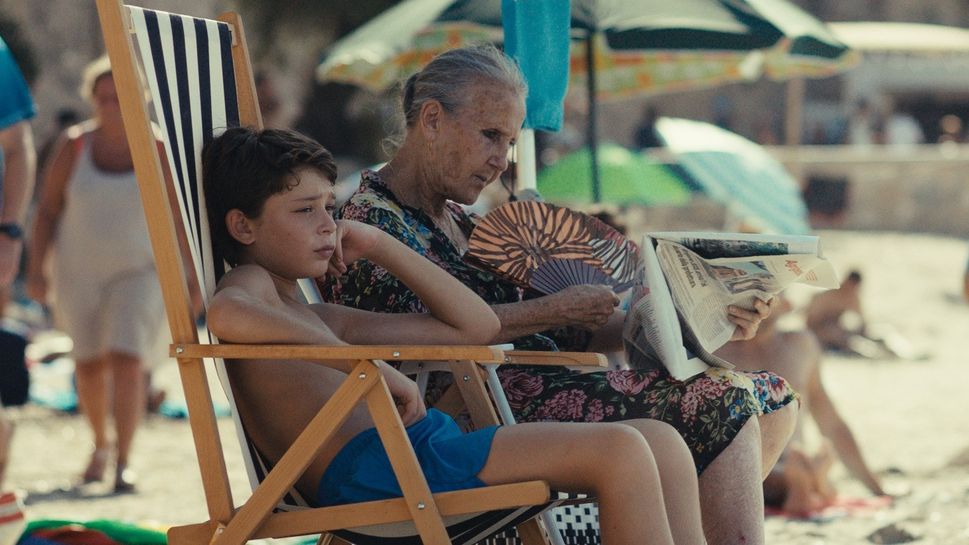
Margherita Spampinato’s award-winning feature debut, Sweetheart (Gioia mia in Italian), is a beautifully textured film that delicately explores the need to connect across generations. The film follows Nico, played by Marco Fiore, a tech-obsessed boy from Milan who is reluctantly dropped off to spend a tech-free summer in a seaside Sicilian town with his grumpy, deeply religious great-aunt, Zia Gela, played by Aurora Quattrocchi.
Spampinato shoots most of the early film indoors within an old apartment building. It is a Wi-Fi-free mansion that becomes a character in its own right. It is a cavernous shadowland filled with religious relics, superstitions, and an almost complete absence of modern appliances – although Gela does have an iron. When filming the scenes, resources were scant and local grandmothers even donated their own personal, antique family relics to help build the film’s set design. It works beautifully.
The cinematography also plays its part, using the apartment’s dark and light to trap Nico in a slow-paced world populated by what Gela claims are angels and spirits. What initially appears to be a closed world is revealed as a small and vibrant community where people look after each other. Nico glances out at the other children playing the sun, but is relucant to join. The film implicitly rejects our social media-obsessed landscape in favour of human connection. When the characters finally leave the building and enter the glorious Sicilian sun during the final sequence, it provides a wonderful resolution. At the end of the film, having let go of his attachment to computer games, Nico plays in the sea with his friends while his aunt talks to her friends on the beach.
The film is autobiographical. In an interview with Cineuropa, Spampinato said that the film drew heavily from her own childhood. She spent every summer holiday in Sicily visiting her grandmother’s cousins – elderly spinster aunts. She said, “The essence of the film is the need we have to listen to each other; to be together, to be connected. It’s a universal concept.”
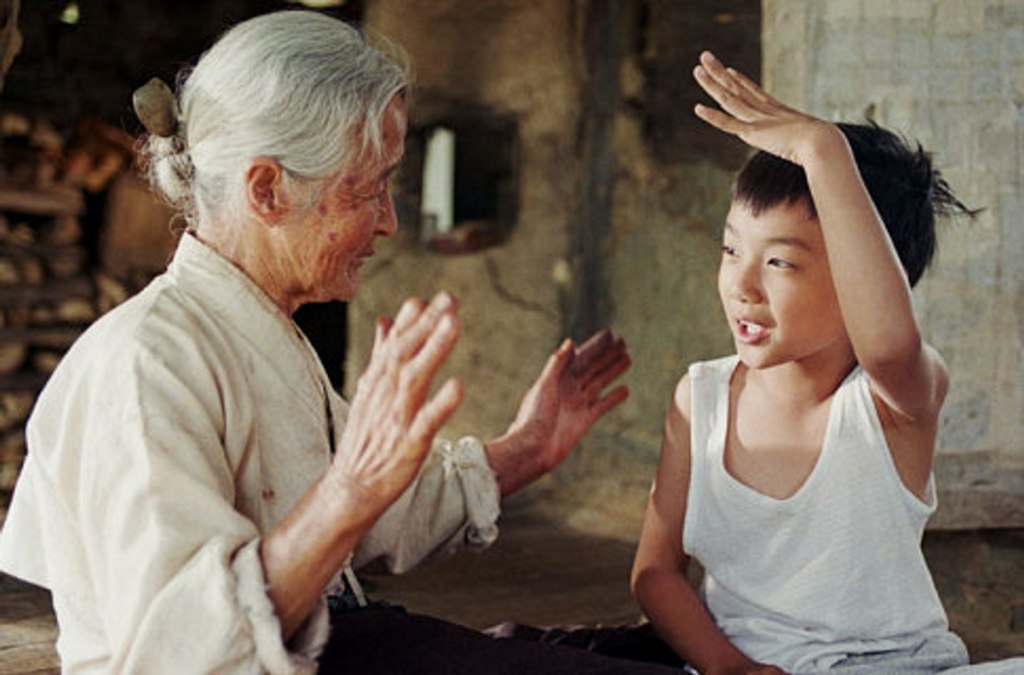
It is no surprise, then, that Sweetheart shares similar terrain with Lee Jeong-hyang’s The Way Home (2002). Both films operate on the exact same premise: a spoiled, hyper-connected city boy is dumped in a remote location with an elderly woman who represents an ancient, slower way of living. One is from Italy, and the other is Korean.
Where the boy in The Way Home throws tantrums over a dead Game Boy battery and a lack of fast food, Nico battles the agony of zero bars of internet and his aunt’s demanding spiritual routines. Both films reject cheap sentimentality. Instead of characters suddenly transforming, the bonds are forged through silent observation, shared vulnerability, and the gradual erosion of the children’s urban arrogance.
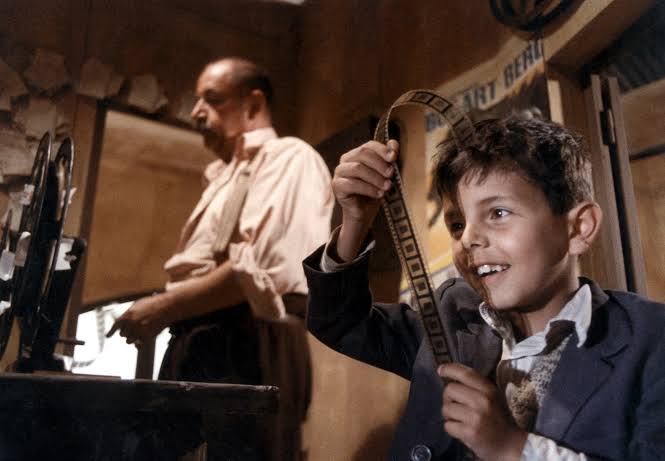
While The Way Home focuses entirely on the rural-urban divide, Sweetheart sets itself apart by centering on the clash between modern secular reason and traditional religious life. In doing so, it is a triumph of small-scale filmmaking. It also shares several strong cultural links to Giuseppe Tornatore’s Cinema Paradiso (1988). Both films are deeply rooted in Sicily’s distinct atmosphere. The unique landscape, architecture, and intense sun shape the isolation and emotional growth of the young protagonists. The relationship between young Nico and his elderly aunt Gela resembles the bond between young Totò and the projectionist Alfredo in Cinema Paradiso. In both stories, a stubborn elder reluctantly takes a mischievous boy under their wing, with deep affection hidden beneath a gruff exterior. The title of the film translates to “My Glory”, which is the note on which the film ends. That glory is not great wealth, but the pleasure of good food, company, and the sun.
The film has won two major prizes: the CINÉ+ Special Jury Prize and the Pardo for Best Performance for Quattrocchi at the Locarno Film Festival.
The film is currently a centrepiece of the Italian Film Festival, showing at cinemas across Australia in September and October.

